This Wild New Travel Trend Could Turn Flight Delays Into Cash
This Wild New Travel Trend Could Turn Flight Delays Into Cash

IR_Stone/iStock
https://www.fodors.com/world/north-america/usa/experiences/news/you-could-soon-bet-on-flight-delays-under-new-federal-proposal
Kalshi wants to let users bet on flight delays and cancellations through regulated prediction markets.
Like a bit of a flutter now and then? If you’re an airline traveler (or just have an interest in airline on-time odds), you might soon be able to bet on whether or not your flights will be delayed.
The prediction market platform Kalshi has filed with the Commodity Futures Trading Commission (CFTC) to allow users to hedge funds on airline on-time performance. If approved, the platform would allow traders to predict whether the flight-cancellation rate at a particular airport will be higher during a specific period.
In order to settle predictions, Kalshi plans to use the flight-tracking platform FlightAware, with data from the Department of Transportation (DOT) as a backup.
FlightAware seemed to push back on the plans on Wednesday. “No company is—or will be—authorized to use the data collected through the FlightAware network for this purpose,” a spokesperson said in a statement. “Any customer who uses FlightAware in violation of the terms of use will have their account terminated.”
It’s worth noting that the Kalshi platform has filed with federal regulators for permission to hedge funds on airline performance, but states and other jurisdictions may have separate limitations. Sports betting, a similar type of gambling that is also supported by Kalshi, is legal in 39 states plus Washington, D.C. Thirty states allow online sports betting using Kalshi or similar platforms. States that continue to ban sports betting include Texas, California, Alaska, Hawai‘i, Alabama, Idaho, Minnesota, Oklahoma, South Carolina, and Utah.
Prediction markets have exploded during the World Cup. Kalshi posted $31 billion in notional trading volume in June. Sports contracts account for around 85% of that trading. Unlike sports books, where users bet against the house, which sets the odds and takes a fee, prediction markets allow users to bet directly against each other at a variable price based on real-time probability. The federal government views prediction market bets as financial derivatives, and they’re regulated by the CFTC.
Prediction markets also allow trades based on geopolitical events, weather, and other outcomes that can sometimes be easily influenced. The U.S. House and Senate have both banned their members and staff from betting on prediction markets because of the sensitive information they have access to. Some states have also begun reviewing whether to place specific restrictions on prediction markets.
Airline delays and cancellations, however, are less subject to manipulation. However, once prediction markets begin to include airline on-time performance among their trading options, airlines would need to spend resources to monitor workers who ultimately make decisions on whether or not to delay flights. Many airlines already have longstanding rules prohibiting gambling or betting while on duty, and gambling or betting, formally or informally, on operational outcomes.
Some airlines and other companies have already been forced to review their own policies in response to the explosive growth of prediction markets. Many companies have had to make more explicit rules on using company data for personal gain—including the use of the data to inform trades on the markets- but so far progress has been slow.
In April, the Justice Department indicted a U.S. Army soldier for using classified information about the timing of the capture of Nicolás Maduro in Venezuela to make wagers on Polymarket, a similar prediction market platform. The soldier involved reaped a profit of more than $400,000 from a successful trade on the platform.
According to the Bureau of Transportation Statistics, 77.7% of major airline flights in the United States were considered on time, or had arrived within 15 minutes of their scheduled arrival time.
Checking the replay: World Cup host markets look at the tournament's wins and losses for hotels
Local reporting shows variance in performance from city to city

The Argentina team applauds the fans after the FIFA World Cup 2026 semifinal match between England and Argentina at Atlanta Stadium on July 15, 2026, in Atlanta, Georgia. (Photo by Catherine Ivill - AMA/Getty Images) (Getty Images)
https://www.costar.com/article/1042391114/checking-the-replay-world-cup-host-markets-look-at-tournaments-wins-losses-for-hotels
And then there were two.
New York City and Miami will field the two remaining 2026 FIFA World Cup matches with 102 final whistles already blown.
Lionel Messi’s Argentina takes on Lamine Yamal’s Spain in the finals in East Rutherford, New Jersey, on July 19. Hoteliers in South Florida, however, are more interested in the third-place match being held in Miami on July 18 between England and France.
The biggest World Cup in terms of teams competing and total matches has been a memorable one, for soccer fans and hoteliers alike.
North America hosted the tournament for the first time since 1994 and split the hosting duties between 16 markets: 11 in the U.S., three in Mexico and two in Canada.
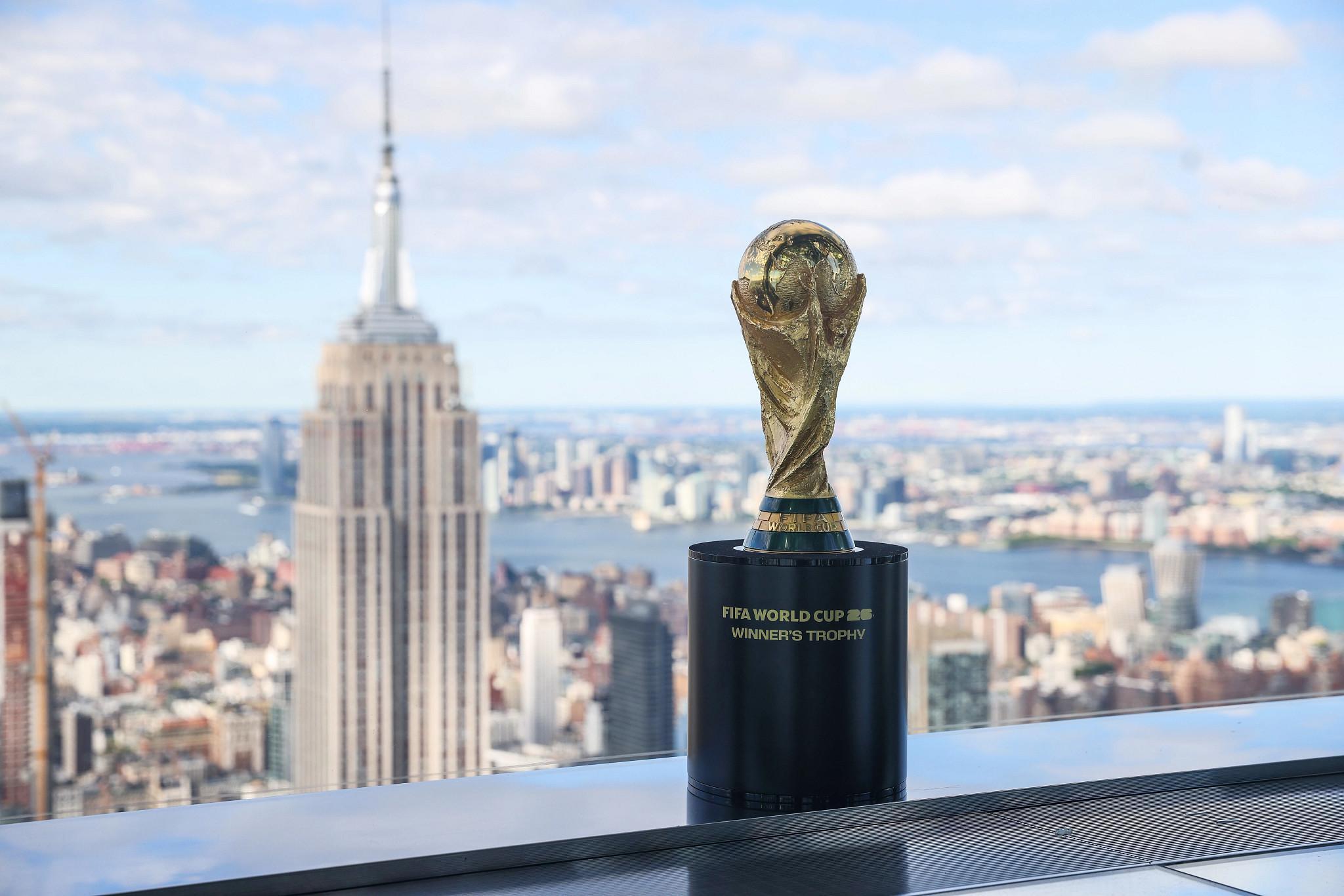
Hoteliers initially had sky-high expectations for what the global tournament could mean for hotel performance. Those expectations see-sawed in the months leading up to its start, with most settling for the hopes of better performance on an annual basis but not at the level they once anticipated.
Regardless of the final outcome, the event served as a testing ground for the U.S. as it prepares to host several other major sporting competitions over the next decade, including the 2028 Los Angeles Olympics, the 2031 FIFA Women’s World Cup and the 2034 Salt Lake City Olympics.
Checking in with the data
Before the start of the World Cup, Didio Pequeno, director of hospitality market analytics, Northeast and Midwestern U.S. for CoStar Group, said the hotel impact from the tournament would likely fall between the initial high expectations and the growing pessimism in the months leading up to it.
He said there was too much focus on purported dips in occupancy and not enough attention being drawn toward massive jumps in rate.
"When I talk to people, whether that be general managers or revenue managers around the country, I'm getting a lot of mixed signals, but I think the prevailing thought is that yes, the World Cup will still boost performance through the summer," he said. "Performance is going to vary market by market, some will perform better than others, of course, but it's not really about demand, it's more about markets being able to drive rate."
Midway through the tournament, Pequeno said the performance was playing out as expected.
Only three of the 11 U.S. host markets saw occupancy increase during the first two weeks of the tournament: San Francisco, Dallas, and Los Angeles. Every U.S. host market saw increases in average daily rate of at least 14% and revenue per available of at least 12%.
San Francisco was the strongest performing market during this timeframe, with RevPAR up 55%, ADR up 32%,room and occupancy up 17% year over year.
"A key factor behind this outperformance is the city’s hosting of big conferences, such as the Databricks Data + AI Summit 2026, which was held from June 15 to June 18 and drew over 30,000 attendees. In addition, the city had an easy year-over-year comparison, as hotel performance in the prior year was relatively weak. San Francisco had positive momentum heading into the tournament, bolstered by the region’s strong year-to-date recovery," Pequeno wrote.
In the week of June 21-27, U.S. RevPAR and ADR hit all-time highs of $129 and $178.82, respectively, STR's Cole Martin and Isaac Collazo wrote. This success extended into the knockout stage. For the week of June 28 to July 4, performance continued to improve.
"World Cup markets posted a 23% increase in RevPAR despite hosting nearly 50% fewer matches than the previous week, highlighting the continued impact of the tournament as it moved into the knockout stage," Martin and Collazo wrote.
CNBC reports that "travel bookings have accelerated as the field of competitors narrows and fans converge from around the world to see the high-stakes matches." Spain defeated France in Dallas on Tuesday while Argentina eliminated England on Wednesday in Atlanta.
East Rutherford will host the World Cup final on July 19. The impact on the New York City/New Jersey region is expected to be likened to that of another major sporting event in the U.S.: the Super Bowl.
"You have reports of people paying thousands of dollars to attend matches, travel, hotels, and all of that," Pequeno said. "Personally, I think New York is most likely going to absolutely crush it for the final."
Market-level anecdotes
Reporting from local news outlets reveals that the economic and hotel impact in host markets has varied.
The economic impact in Arlington, Texas — home of the NFL's Dallas Cowboys — has ranged from $18 million to $24 million per match, Brent DeRaad, president of the Arlington Convention & Visitors Bureau, told CBS News Texas. Arlington Mayor Jim Ross said hotel revenue in June was a record $31 million, easily surpassing the previous high for a month of $23 million.
The Philadelphia Convention and Visitors Bureau said hotel revenue increased more than 50% year over year on the six match days in the city. ADR was up 48% to an average of $367. The Atlanta Convention and Visitors Bureau said room nights booked were down year over year during the World Cup, but overall hotel revenue jumped 15%.
Andrea O'Hara, executive director of the Hotel and Lodging Association of Greater Kansas City, said the hotels closest to Fan Fest, the stadium, and base camp team facilities are the ones performing well in the city, but hotels in the suburbs are falling behind expectations.
South Florida hotels are enjoying a sizeable boost in RevPAR, due in large part to rates pushing higher than in years past.
“The improvement in Miami hotels continues to be on the rate with a little bit from occupancy,” said Jan Freitag, national director, hospitality analytics at the CoStar Group, in an interview with the Miami Herald.
John Fitzpatrick, president and CEO of New York City-based owner and operator Fitzpatrick Hotel Group, told The City Reporter that revenue increased 15% over June last year, well below expectations.
“The World Cup brought business to the city, and it helped us, but I was expecting a lot more,” he said. “It’s not the big hype everybody was talking up.”
The Hotel Association of New York said it’s expecting total hotel revenue for the city to increase by $100 million from the World Cup, a third of its $300 million estimate prior the start of the tournament.
In May, 65% of Los Angeles respondents to an American Hotel & Lodging Association report said hotel bookings were lower than in a typical summer, the Los Angeles Times reports. There was late demand pickup in the city, though, which made up for some of the initial pessimism.
“Demand has picked up, consistent with a recent trend toward shorter booking windows for events of this caliber,” Rosanna Maietta, CEO of AHLA, said in a statement. “Unlike typical leisure travel, many travelers finalized plans and secured tickets closer to the start of the games.”
Houston First Corporation said hotel occupancy was down 2% in June compared to last year, but average daily rate rose 16%, consistent with the broader trend across the U.S., local ABC13 reports.
“When you have the Super Bowl or the Final Four, usually the day after they announce, you have no rooms to sell. In this, we were not even close to that,” Emre Ozsut, regional director of sales at The Lancaster Hotel in Houston, said.
The One Thing You Have to Do in Every State

GRPimagery/iStock
https://www.fodors.com/world/north-america/usa/experiences/news/photos/the-absolute-best-thing-to-do-in-every-state
The ultimate USA Bucket List.
As the United States approaches its 250th anniversary, events examining and celebrating our history abound, but we’re focused firmly on the present and on where a traveler should go today to see the absolute best this country has to offer. From national parks and gorgeous beaches to history trails and iconic landmarks, here is the best of what each of the 50 states (and Washington, D.C.) has to offer.
And for even more of the best to see, do, and eat in each state, be sure to check out our Bucket List USA guidebook, available everywhere books are sold.
Edited by Amanda Sadlowski.
PART III

PHOTO: TOURISM SANTA FE
31 OF 51
Santa Fe
WHERE: New Mexico
On an inclined plateau at the base of the Sangre de Cristo Mountains—at an elevation of 7,000 feet—Santa Fe is both the highest and oldest capital city in the country. Its streets brim with reminders of four centuries of Spanish and Mexican rule, and of the Pueblo cultures that have thrived in the area for many centuries. The town is perhaps best known for its adobe homes and art. Artists and writers—from Willa Cather to George R. R. Martin—have been drawn to the rugged beauty and dry air of Santa Fe for generations. Compact though it is, the so-called City Different contains an astounding trove of museums that celebrate its creative traditions, including the Georgia O’Keeffe Museum, Museum of International Folk Art, Museum of Indian Arts & Culture, and contemporary SITE Santa Fe.

PHOTO: MARGARETW/ISTOCK
32 OF 51
Central Park
WHERE: New York
Upward of 42 million people visit New York City’s iconic Central Park every year, but with its 843 acres of wide-open spaces, you can usually find a spot all to yourself. Designed by Frederick Law Olmsted and Calvert Vaux in 1858, Central Park was created to give city dwellers lots of fresh air. The park is now home to major attractions including the Central Park Zoo, with more than 130 species of animals; Sheep Meadow and its sunbathers; and Conservatory Water and its regatta of model boats. Wollman Rink is a wintertime destination for ice-skaters while the open-air Delacorte Theater is the summertime home to Shakespeare in the Park.

PHOTO: WERKSMEDIA/ISTOCK
33 OF 51
Great Smoky Mountains National Park
WHERE: North Carolina
Great Smoky may be the most visited national park in the United States, but that doesn’t mean there’s no peace or wonder to be found. The park straddles the state line between North Carolina and Tennessee, and the Carolina side is far less visited than Gatlinburg and Pigeon Forge in Tennessee. The area provides boundless opportunities for off-the-beaten-path outdoor adventures such as hiking and fishing, and you will almost always spot elk in the evening and early morning, as well as wild turkeys, deer, and perhaps bears.

PHOTO: NPS/DAVE BRUNER
34 OF 51
Theodore Roosevelt National Park
WHERE: North Dakota
Theodore Roosevelt first came to the Badlands in 1883 to hunt bison. He fell in love with the untamed landscape, and it inspired him to later create the U.S. Forest Service to protect wildlife on public lands. Today, part of Theodore Roosevelt National Park’s allure is its utter lack of people. Its size (110 square miles) and remote location make it one of the least visited—but most spectacular—national parks. Composed of three parts (a North Unit, South Unit, and Elkhorn Ranch Unit, where Roosevelt lived), this tranquil park is perfect for birding, wildlife viewing, hiking, camping, stargazing, and scenic drives.

PHOTO: AERIAL AGENTS
35 OF 51
Rock & Roll Hall of Fame
WHERE: Ohio
A must-visit for music fans, the Rock & Roll Hall of Fame in Cleveland is loaded with memorabilia, photographs, costumes, instruments, and much more from artists like Elvis Presley, Whitney Houston, and the Beatles. As you’d expect from a museum dedicated to music, the exhibits are packed with films, interactive kiosks, and videos, so you can watch and listen to iconic performances. The museum includes the main exhibit hall, which traces the beginnings and evolution of rock and roll, and the Hall of Fame level, with panels honoring each inductee. The architecture of the building itself is worth a look: designed by world-renowned architect I. M. Pei, it features pyramids and a tower, and is meant to look like a record player from above.

PHOTO: DAVID PILLOW/DREAMSTIME
36 OF 51
Tulsa’s Historic Greenwood District
WHERE: Oklahoma
Known as “Black Wall Street” for the wealth flowing through the community, Greenwood was created by the African-American community in Tulsa in the early 1900s. Home to restaurants, hotels, movie theaters, and more, Greenwood was the site of a deadly racially motivated attack in 1921, when up to 300 people were killed and a staggering amount of homes and businesses were destroyed. Today, Greenwood is undergoing a resurgence, with a focus on community initiatives. Though much smaller today, the area is home to restaurants, stores, and more. Greenwood Rising tells the story of the Tulsa Race Massacre through powerful and moving exhibits, storytelling, and artifacts.

PHOTO: TRAVEL OREGON
37 OF 51
The Columbia River Gorge
WHERE: Oregon
Completed in 1922, the Historic Columbia River Highway was the first planned scenic road in the country built expressly for automotive sightseers. Serpentine U.S. 30 climbs to wooded bluffs, passes half a dozen waterfalls, and provides access to hiking trails leading to still more falls and gorgeous overlooks. Technically, it extends the entire 74-mile length of the beautiful Columbia Gorge, but much of that is along the modern interstate. It’s the 22-mile western segment that’s the real draw. The most famous attraction here is Multnomah Falls, a 620-foot-high double-decker torrent, the second-highest year-round waterfall in the nation.

PHOTO: NPS PHOTO
38 OF 51
Independence National Historic Park
WHERE: Pennsylvania
Much of America’s origin story can be traced back to a few blocks in downtown Philadelphia now known as Independence National Historical Park, home to Independence Hall and the Liberty Bell. They may not have the same instant name recognition, but other attractions like the Second Bank of the United States, Congress Hall, and the National Constitution Center are all well worth a visit. Throughout the area you’ll find actors dressed in 18th-century garb, horse-drawn carriages, and cobblestone streets—the pull of history is undeniable.

PHOTO: GEORGE GRAY/THE PRESERVATION SOCIETY OF NEWPORT COUNTY
39 OF 51
Newport Mansions
WHERE: Rhode Island
The Gilded Age mansions of Bellevue Avenue, including the likes of The Breakers, Marble House, and The Elms, are the go-to attraction for many Newport visitors. These ornately detailed late 19th-century homes, designed with a determined one-upmanship by the very wealthy, are almost obscenely grand. Their owners—Vanderbilts, Astors, Belmonts, and other budding aristocrats who made the city their playground for a mere six to eight summer weeks each year—helped establish the best young American architects and precipitated the arrival of the New York Yacht Club, which turned Newport into one of the sailing capitals of the world. See the backyards of the mansions as well as dramatic views of Easton’s Beach and Narragansett Bay while strolling along the 3½-mile Cliff Walk.

PHOTO: BRYAN T BOYLE/ISTOCK
40 OF 51
Historic Downtown Charleston
WHERE: South Carolina
In Charleston, dozens of church steeples punctuate the low skyline, and horse-drawn carriages pass centuries-old mansions, their stately salons offering a crystal-laden and parquet-floored version of Southern comfort. Outside, magnolia-filled gardens overflow with carefully tended heirloom plants. The city may resemble a 19th-century etching come to life, but look closer, and you’ll see that block after block of old structures have been restored, making this one of the South’s best-preserved cities. Get a great city introduction with a history, food, or ghost tour. You’ll learn about Charleston’s layers, its Revolutionary and Civil War history, and get the lay of the land, including East Bay Street’s famous Rainbow Row, with 13 pastel row houses built between 1748 and 1845.
DUHC&S | Strategic Hospitality Consulting & Advisory
We transform hospitality and tourism businesses through strategic solutions, operational efficiency, and comprehensive renovation. With over 40 years of experience working with brands like Hilton, Hyatt, Sheraton, and Sonesta, we enhance asset value and profitability through:
*Operational excellence and brand standards (GSI +90%)
*Market penetration and commercial strategies
*Key partnerships and disruptive innovation
*Hotel openings and repositioning
Proven results :
✅ 48% GOP |
✅ +120% asset valuation growth
✅ Successful projects across 6 Latin American countries
🔹 Let's connect :
📩 Email: diurugeles@gmail.com
📱 WhatsApp: +57 3153259968
🎥 YouTube:https://www.youtube.com/@DUHC-S
Instagram: https://www.instagram.com/diur_2000/
https://viajes-noticias-duhospitality.blogspot.com
https://viajes-duhospitality.blogspot.com
https://travel-duhospitality.blogspot.com
Disclaimer
DUHC&S shares this information for educational and informational purposes only. The news articles reproduced here are sourced from public and recognized media outlets. We are not the original authors of this content but rather its distributors. All credits go to the original sources cited in each article. If you are the legitimate owner of any material and wish to have it modified or removed, please contact us immediately at diurugeles@gmail.com, and we will address your request promptly.


Comments
Post a Comment