FAA Is Cracking Down on Drunk Passengers
FAA Is Cracking Down on Drunk Passengers

https://www.fodors.com/news/news/faa-is-cracking-down-on-drunk-passengers
The FAA is seeking a $165,000 penalty against Alaska Airlines after alleging the carrier allowed intoxicated passengers to board multiple flights between 2024 and 2025.
The Federal Aviation Administration (FAA) has proposed a $165,000 fine against Alaska Airlines for allowing passengers who appeared to be intoxicated on board their flights.
The FAA says the alleged incidents occurred on 11 flights between February 2024 and February 2025. Federal regulations prohibit commercial airlines from allowing passengers to board if they appear to be intoxicated. Regulations also prohibit passengers from drinking alcohol onboard that hasn’t been served to them by a flight attendant, and require crews to discontinue alcohol service to passengers who begin to appear intoxicated.
Airlines train ground personnel and cabin crews to briefly scan boarding passengers for signs they have been drinking or may be intoxicated. The same workgroups are also trained on diplomatically approaching passengers they suspect may be intoxicated to gather facts about the situation to ensure they don’t deny boarding to passengers who have taken medication or have disabilities whose characteristics can be mistaken for intoxication.
Alaska Airlines told the news agency Reuters that they participated fully in the FAA audit of its policies and said it takes the issue seriously.
“Since the FAA shared these concerns with us over a year ago, we made meaningful changes to ensure compliance with the FAA’s expectations–including enhanced training for all flight attendants and customer service agents,” Alaska said in a statement Tuesday. “We respect the results of the FAA’s audit and are confident in the changes that have been in place for the last year to ensure our shared standards are being met.”
The FAA typically proposes a fine following an investigation with the cooperation of the airline. The agency typically proposes fines as punitive actions if they believe the violations are the result of insufficient oversight on the part of the carrier. Proposed fines are not final rulings; airlines can challenge the FAA’s proposal in court, or they can choose to pay the fine.
Alaska gave no comment on how they plan to respond to the proposed fine.
Commercial airlines are one of the few places where the federal government directly regulates the service of alcoholic beverages. State and local governments regulate the sale of alcoholic beverages, so rules vary by airport. It’s worth noting that virtually all states prohibit license holders from selling alcoholic beverages to patrons who appear to be intoxicated.
Intoxicated passengers pose significant safety risks on board commercial airliners. They’re typically unable to follow crew safety instructions, have been known to be combative or non-cooperative with crewmember instructions, and can endanger passengers or crew if their behavior becomes aggressive or erratic while in-flight. In the most difficult situations, intoxicated passengers have posed an imminent enough threat that flights have been diverted, at significant delay and expense.
Intoxicated passengers aren’t only a problem at U.S. airports. Last year, the head of Irish low-cost airline Ryanair proposed that airports do their part to limit alcohol service to passengers, particularly on early morning flights. In 2021, the FAA asked airports to prohibit the sale of “to-go” alcoholic beverages to passengers. Many jurisdictions had relaxed rules on alcohol sales during the pandemic when dine-in options were limited or prohibited.
The FAA’s release did not indicate which flights or from which cities the audit alleged passengers appearing to be intoxicated had boarded Alaska flights, and did not reveal how the agency reached its conclusions. Airlines typically document actions taken when they suspect a passenger to be intoxicated, including whether or not the passenger is ultimately allowed to travel on their original flight or a later flight.
Alaska Airlines is a subsidiary of Seattle-based Alaska Air Group, which also includes Hawaiian Airlines and regional carrier Horizon Air. The three airlines operate around 1,500 daily flights.
How conflict in the Gulf is remapping global travel

https://www.mckinsey.com/industries/travel/our-insights/how-conflict-in-the-gulf-is-remapping-global-travel
Margaux Constantin is a partner in McKinsey’s Dubai office, where Youssef Harake is an associate partner; Riccardo Boin is a partner in the Milan office; Peimin Suo is a knowledge expert in the Boston office; and Steffen Köpke is a capabilities and insights expert in the Düsseldorf office.
Geopolitics is disrupting the summer travel market, but traveler demand remains strong. Tourism players can take steps to navigate the challenge.
Though recent developments suggest potential for shifting dynamics in the Gulf region, disruption continues to reshape global travel patterns, alter airline economics, and test the resilience of tourism markets worldwide. People still want to see the world, but geopolitical tensions and potential continued airfare increases are leading some travelers to take a wait-and-see approach—hoping for greater clarity and confidence before booking their journeys. Some could hope to offset expected higher transportation costs by spending less on accommodation and experiences. Others may find it more difficult to reach the destinations they want to visit.
Travel companies can use this moment to take stock of how recent disruption has affected travel, and it is worth assessing what changes could persist going forward. Amid geopolitical uncertainty, hospitality players tend to face shorter booking windows as guests make last-minute decisions. Airlines can grapple with disrupted air corridors, rising fuel costs, and weakened connectivity through key hubs, which can increase operating expenses and result in higher fares on major international routes. For Gulf economies that have strived to position themselves as global aviation crossroads and tourism destinations, the disruption has been especially acute, causing declines in passenger flows and hotel revenues.
While recognizing that the dynamics of this situation are fluid, this article suggests considerations for tourism stakeholders looking to meet the moment with well-formed strategies.
Do people still want to travel?
In many markets, demand is intact. But uncertainty has delayed bookings, reshaped travel patterns, and influenced spending and channel choices. Travelers still crave flexibility as they wait for geopolitical dynamics and travel pricing to evolve.
For example, McKinsey’s Italian consumer 2026 summer travel survey indicates that as of May 20, 74 percent of Italians said they intend to travel this summer, but 63 percent had not fully booked. This suggests that demand persists, but travelers are seeking to maintain their flexibility. Fifty-six percent of respondents said their travel plans were affected in some way by geopolitics, but only 3 percent canceled outright. Meanwhile, 24 percent of respondents said their desire to wait for further information and news before solidifying travel plans was a barrier to booking.
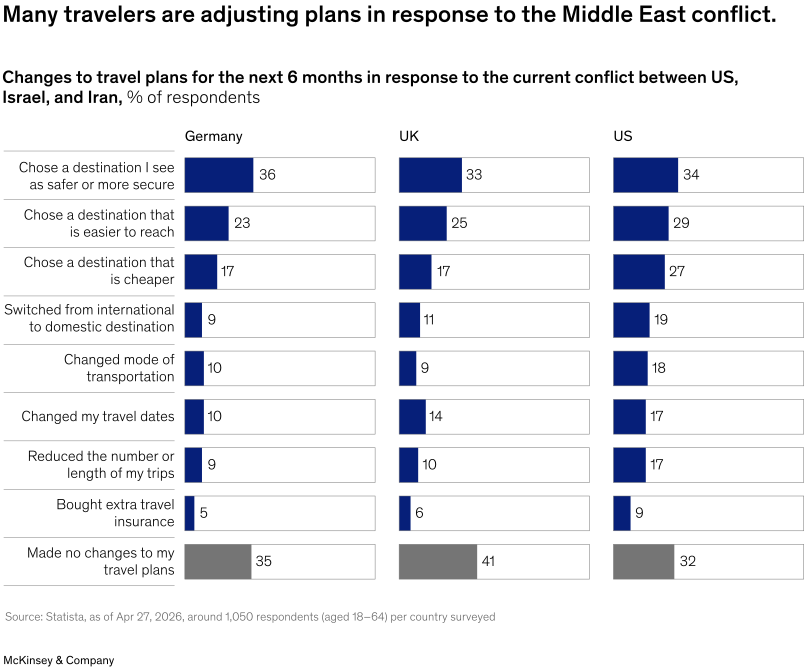
There is further evidence that traveler behavior has been materially affected by the Middle East conflict. As of late April, roughly 60 to 70 percent of travelers across the United States, Germany, and the United Kingdom said they were adjusting their travel plans over a six-month horizon. Safety is the dominant decision driver across all three of these markets, ranking ahead of convenience and price (Exhibit 1). The United States shows the strongest behavioral shift, with American travelers more likely to switch from international to domestic travel and to change their mode of transport. Some are relying more heavily on travel agents for confidence and verification during a time of flux.
Exhibit 1
We strive to provide individuals with disabilities equal access to our website. If you would like information about this content we will be happy to work with you. Please email us at: McKinsey_Website_Accessibility@mckinsey.com
Can travelers still get where they want to go?
Finding flights has become more difficult for some travelers. Facing rising costs and traveler uncertainty, airlines across the globe reduced their scheduled offerings. Many airlines—and especially low-cost carriers—began to trim their weaker routes in the face of fuel cost pressure. There could be further capacity reductions related to fuel cost volatility.
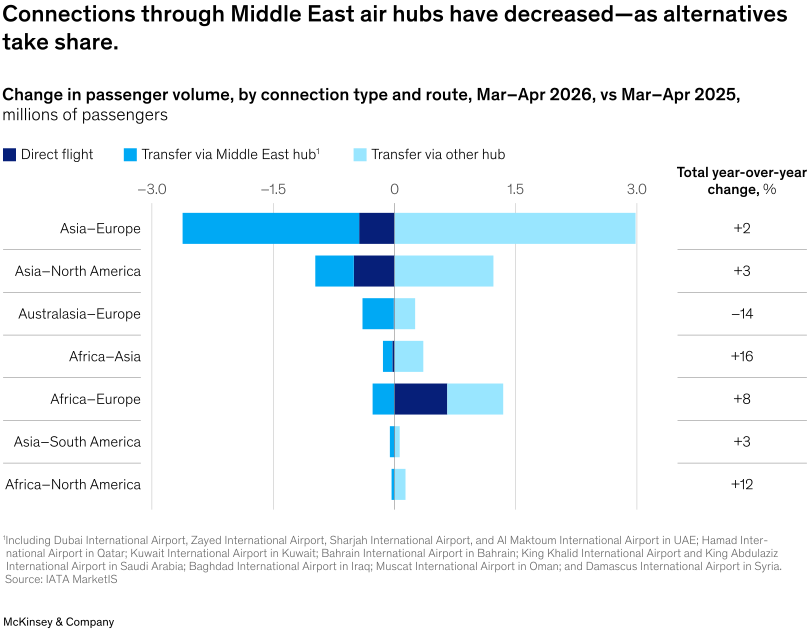
Meanwhile, connectivity through Middle Eastern air hubs became significantly challenged as a result of the conflict. As travelers begin to be routed through alternative hubs, the total number of international passengers connecting via Middle Eastern hubs fell by 5.1 million (a roughly 53 percent decrease) year over year from March to April 2025 to March to April 2026 (Exhibit 2). It’s worth noting that the region’s central location and previously established global connectivity could aid its recovery as a travel and aviation hub. Some Gulf travel operators are using this period as an opportunity to refresh and upgrade offerings, which suggests confidence in a recovery.
Exhibit 2
We strive to provide individuals with disabilities equal access to our website. If you would like information about this content, we will be happy to work with you. Please email us at: McKinsey_Website_Accessibility@mckinsey.com
For most markets, connections via Middle Eastern hubs are at least partially replaced by connections through alternative hubs outside the Gulf region. For instance, Istanbul has seen increased traffic as an alternative connection point. Other traffic is being replaced by direct flights that bypass connections altogether. For instance, some Chinese airlines have added more direct flights to Europe. Chinese and Turkish carriers have added more than 4,000 flights to their schedules for June through November 2026, accounting for roughly 56 percent of total capacity added by the top ten airlines.
McKinsey analysis examining more than 90 tourism demand variables indicates that the total number of available airline seats and the presence of direct flights are the two most significant factors in a destination’s ability to attract international leisure visitors. An increase in direct flights on certain routes could potentially lead to reshaped travel flows.
How much could airfares rise?
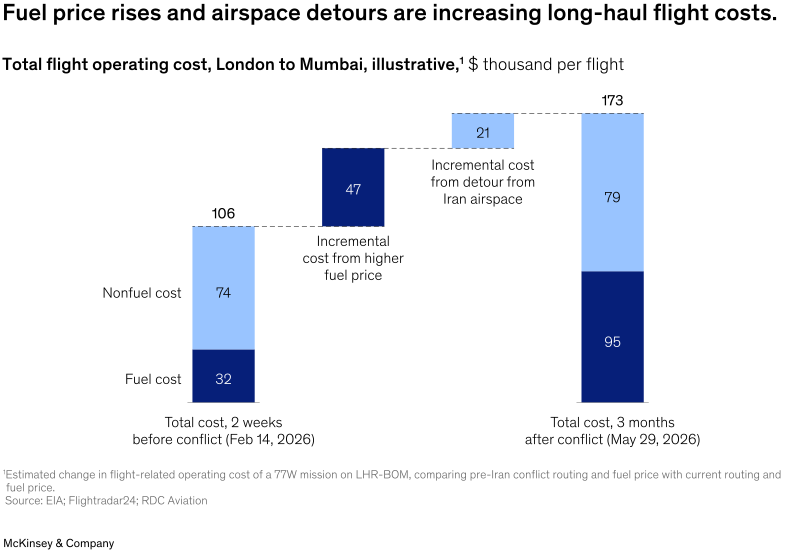
Airfares have been under pressure as constrained airspace and higher jet fuel prices drove up costs for airlines. As an illustrative example, a flight from London to Mumbai—traveling a greater distance because of restricted airspace in the Gulf region—could see a 63 percent increase in cost versus a pre-disruption baseline (Exhibit 3). The potential result for such a flight could be ticket price increases ranging from roughly 13 to 44 percent, assuming costs are passed on to passengers.
Exhibit 3
We strive to provide individuals with disabilities equal access to our website. If you would like information about this content, we will be happy to work with you. Please email us at: McKinsey_Website_Accessibility@mckinsey.com
Where could demand shift as Gulf region travel faces headwinds?
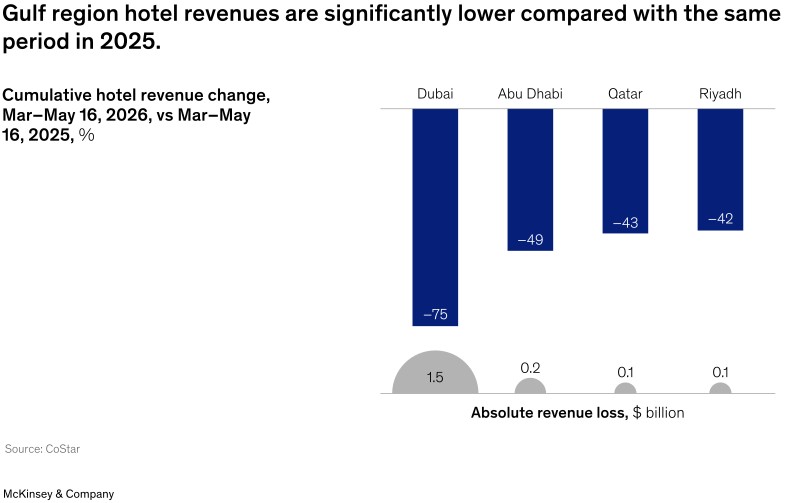
Many travelers are revising plans to visit the Gulf region amid geopolitical tension in the Middle East. Most Gulf region markets are experiencing significant declines in accommodation revenue (Exhibit 4). Dubai has seen the largest effect, with a 75 percent year-over-year drop in room revenue—equating to a $1.8 billion decrease. Luxury hotels have faced particular challenges as high-end demand has tended to be more crisis-sensitive than mass-market and domestic demand.
Exhibit 4
We strive to provide individuals with disabilities equal access to our website. If you would like information about this content, we will be happy to work with you. Please email us at: McKinsey_Website_Accessibility@mckinsey.com
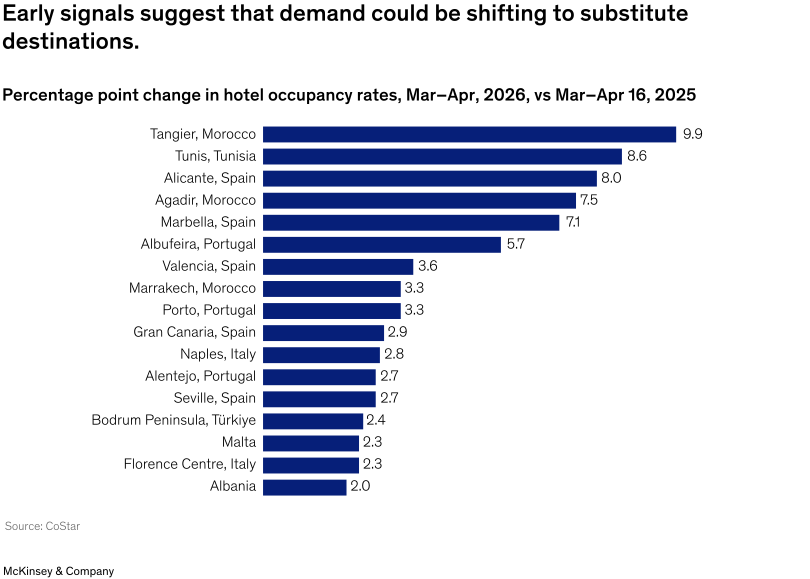
Where is demand shifting to and gaining momentum? Early signals suggest many travelers are choosing to stay closer to home (Exhibit 5). Europeans who might have visited Asia in the past could be more likely to book travel to, for example, a Mediterranean destination such as Tangier or Tunis.
Exhibit 5
We strive to provide individuals with disabilities equal access to our website. If you would like information about this content, we will be happy to work with you. Please email us at: McKinsey_Website_Accessibility@mckinsey.com
Gulf destinations are not the only ones that have seen reduced traffic: Small or remote destinations that lack point-to-point flights and are more reliant on Gulf-connecting traffic could face particular challenges. For instance, the Seychelles and Maldives, which are highly dependent on Gulf connections, have seen significantly fewer arrivals since the beginning of the conflict.
How long could the effects on tourism last?
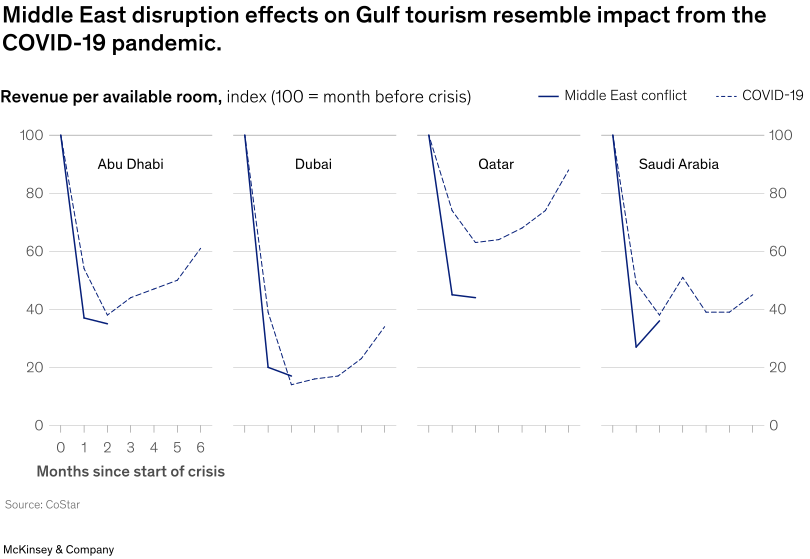
Hospitality revenue declines in some Gulf markets have reached levels not unlike those seen during the beginning of the COVID-19 pandemic (Exhibit 6). If a similar pattern holds, there could be a six- to nine-month recovery horizon. But the recovery path in this case will depend in large part on geopolitical resolution, and safety and security events could prove to have more lasting effects on tourism than a pandemic. Downside risk could relate more to the duration of the decline than to its depth. And even after travel volumes recover, value could still lag, as it can be difficult to climb back to previously established price points.
Exhibit 6
We strive to provide individuals with disabilities equal access to our website. If you would like information about this content, we will be happy to work with you. Please email us at: McKinsey_Website_Accessibility@mckinsey.com
How can travel stakeholders adjust and respond?
Travel players can implement several strategic interventions to prepare for and mitigate business impacts, and accelerate recovery, during a time of volatility.
Airlines could face challenges relating to recovery shape, loyalty resilience, and fuel costs:
- If disruption eases, airlines can monitor the recovery trajectory and take a segmented approach to both network adjustment and pricing. Some markets or segments could have a higher tolerance for elevated risk and lower sensitivity to price. Airlines could align closely with stakeholders to reshape brands and regain share through targeted marketing and incentives.
- High-yield customers could churn. Airlines can stress-test loyalty-tier architecture and improve retention of at-risk members through measures such as status extension and accelerated qualification.
- Margin erosion caused by rising fuel costs can continue even after demand stabilizes, but can be counteracted through a variety of airline actions.
Hospitality companies could need to navigate complications relating to forecasting, pricing, and demand displacement:
- Legacy forecasting models can become unreliable as booking and cancellation windows shrink, which can cause commercial decisions to lag the market. Hospitality companies can improve forecasting by checking demand signals more frequently.
- Unchecked discounting can make it hard to recover margins once the disruption passes. Hospitality companies can consider installing price floors and creating a pricing logic tailored to crisis conditions.
- As demand shifts away from some markets, those markets can lose share that is hard to regain. Employing tactics such as creating a precision acquisition program can target traveler demand pools that are at risk of being displaced. Tailored offers can encourage more resilient high-net-worth segments to return.
Tour operators could need to revamp booking, contact center, and cost-based approaches:
- Service breakdowns and cost leakage can rise sharply during periods of disruption, when ultra-short booking windows exacerbate difficulties. Through a redesigned process for rebooking and reaccommodation, companies could put in place scaled exception management, ready-to-go playbooks, and prebuilt workflows so problems aren’t handled ad hoc, mid-crisis.
- Contact center costs can rise and response times can slow when disruptions lead travelers to want more certainty and assistance. Agentic AI copilots could help ease high-friction service journeys.
- Inflexible cost bases can become burdensome in weaker demand environments. A structural cost reduction program can reinforce near-term efforts to boost productivity.
Geopolitics is increasingly influencing the economics and psychology of travel. While consumer appetite for exploration remains resilient, travelers are becoming more cautious—delaying decisions and rethinking destinations. Travel stakeholders that can respond with agile operations, well-tuned customer strategies, and careful pricing could be best positioned not only to withstand turbulence but also to capture shifting demand as global travel flows are reshaped in real time.
There’s So Much More to Jamaica Than What Most Travelers Know

Yves Alarie/Unsplash
https://www.fodors.com/world/caribbean/jamaica/experiences/news/a-side-of-jamaica-you-probably-have-never-seen
From Jamaica's Blue Mountains to its ocean conservancy efforts, I wanted to explore a side of the island not often seen.
When you hear the word Jamaica, you think of blue water, reggae music, jerk chicken, and rum punch—you’re not far off. But beyond the resorts and postcard views is a Jamaica filled with creativity, history, and culture that stays with you long after you leave.
The capital city of Kingston has a pulse all its own. One minute you’re wandering through Water Lane surrounded by towering murals and vibrant street art and the next, you’re standing inside Tuff Gong Studios, where Bob Marley’s legacy still echoes through the walls. In Jamaica, music isn’t just something you simply hear. It’s a sound woven into the very identity of the island itself.
Too often, travelers visit Jamaica only to stay confined to their all-inclusive resorts. I wanted to experience something different and venture off the beaten path, and so I took a winding road high into the Blue Mountains to the peace and tranquility of Strawberry Hill, a hotel tucked in the hills and touting itself as a magical mountain village. The pace of Jamaica felt quieter and slower here as I looked down at the city below and enjoyed an elevated meal with views that stretched for miles. That feeling continued as I made the trek across the island to Port Antonio, where lush jungle landscapes, hidden coves, and the intimate atmosphere of Geejam Hotel revealed a completely different side of paradise.
One of the more meaningful moments of my trip happened when I went out on a glass-bottom boat with the Alligator Head Foundation. Onboard, I learned how local conservationists are regrowing coral reefs, protecting sea turtles, and planting mangroves to help preserve Jamaica’s coastline for future generations. After weathering recent storms, that work felt even more powerful and served as an important reminder that Jamaica’s beauty isn’t accidental; it’s intentional and one protected by people who deeply love this island.
Of course, there are still those unforgettable Jamaican moments travelers expect—catamaran cruises along the coast, snorkeling through clear waters, sunsets over the Caribbean, music carrying late into the night—but after experiencing the resiliency woven throughout the island, I was reminded that Jamaica is more than a destination, it’s a feeling and one that stays with you long after the trip is over.
A Major U.S. Airport Will Stop Flights on Independence Day

https://www.fodors.com/world/north-america/usa/washington-dc/experiences/news/washingtons-reagan-national-airport-will-temporarily-close-for-july-4-celebrations
Ronald Reagan Washington National Airport will halt flight operations for parts of July 3 and July 4 due to Independence Day events.
Ronald Reagan Washington National Airport will temporarily cease flight operations for the Independence Day rehearsals and celebrations on July 3 and July 4, said the Metropolitan Washington Airports Authority (MWAA).
MWAA, the operator of both Reagan National (DCA) and Dulles International (IAD) said the closures for Independence Day would include cessation of flights for several hours on the afternoon of July 3, and from noon through the end of the day on July 5. During the closure on July 4, terminal services would also operate at reduced capacity.
A number of celebrations, including fireworks displays and planned flyovers by military aircraft will take place in the city on July 4, not only as part of the annual Independence Day celebrations, but also in observation of the 250th Anniversary of American Independence from the United Kingdom.
Travelers needing to reach the DC Area by air on those dates can still book travel to IAD and Baltimore/Washington International Thurgood Marshall Airport (BWI), which will continue normal flight operations. MWAA also noted that airlines have already made some adjustments to reflect the cessation of flights on July 4.
“In some instances, airline flight schedules have already been adjusted to avoid pre-planned airspace closure times and minimize impacts on travelers,” the MWAA statement read. “In other cases, DCA flights may be delayed by temporary holds as coordinated through air traffic control communications. Weather also could impact flights during this time.”
Airlines typically reduce schedules at many airports on July 4 and other holidays when demand declines; some airlines also add flights to the days surrounding the holiday when air travel tends to peak. There are 146 departures scheduled from DCA on July 4—all of them before the noon cutoff. The airport handles between 450 and 400 departures on a typical day.
It’s not uncommon for flight operations to halt during fireworks displays and military aircraft flyovers in Washington, D.C. on July 4, but a complete half-day cessation of flights is the most significant July 4-related impact to operations at DCA on record. In prior years ground stops had been limited to a few hours.
MWAA also anticipated an impact to flight operations at DCA on the following dates:
- June 24-25, Great American State Fair opening
- June 28 Military Appreciation Day
- July 10, Great American State Fair closeout flyover and parachute jump
- August 22-23 Grand Prix near the National Mall
Operations at IAD, 32 miles away from Washington in Northern Virginia, are typically not impacted by airspace restrictions at DCA. The Washington Metro’s Silver Line now travels to IAD from the district, with a one-way trip of approximately 50 minutes. Major US and international carriers serve IAD; it is also a major hub for United Airlines.
DCA is extraordinary among capital cities for its extreme proximity to the highly sensitive security areas in the District of Columbia. The airspace over the US Capitol, White House, National Mall, and U.S. Naval Observatory, the Vice President’s residence, is all restricted, with overflight by commercial aircraft prohibited in all circumstances. Northbound departures from DCA typically make an immediate right turn after takeoff to avoid the restricted airspace in the District, just across the river from DCA.
In other countries, airport operations are not typically affected by national day celebrations, such as July 14 in France or July 1 in Canada. Airports in those countries typically face traffic increases during their respective holidays, but airspace closures on the scale of those at DCA are uncommon.
Amtrak, which operates up to 85 daily trains from Washington’s Union Station, announced no impact to scheduled departures on July 4.
DUHC&S | Strategic Hospitality Consulting & Advisory
We transform hospitality and tourism businesses through strategic solutions, operational efficiency, and comprehensive renovation. With over 40 years of experience working with brands like Hilton, Hyatt, Sheraton, and Sonesta, we enhance asset value and profitability through:
*Operational excellence and brand standards (GSI +90%)
*Market penetration and commercial strategies
*Key partnerships and disruptive innovation
*Hotel openings and repositioning
Proven results :
✅ 48% GOP |
✅ +120% asset valuation growth
✅ Successful projects across 6 Latin American countries
🔹 Let's connect :
📩 Email: diurugeles@gmail.com
📱 WhatsApp: +573153259968
🎥 YouTube:https://www.youtube.com/@DUHC-S
Instagram: https://www.instagram.com/diur_2000/
https://viajes-noticias-duhospitality.blogspot.com
https://viajes-duhospitality.blogspot.com
https://travel-duhospitality.blogspot.com
Disclaimer
DUHC&S shares this information for educational and informational purposes only. The news articles reproduced here are sourced from public and recognized media outlets. We are not the original authors of this content but rather distributors of it. All credits go to the original sources cited in each article. If you are the legitimate owner of any material and wish to have it modified or removed, please contact us immediately at diurugeles@gmail.com, and we will address your request promptly.


Comments
Post a Comment