With 54 Countries to Choose From, How Do You Pick an African Destination?
With 54 Countries to Choose From, How Do You Pick an African Destination?

Getty Images for Unsplash+
https://www.fodors.com/world/africa-and-middle-east/experiences/news/heres-how-to-pick-your-next-african-destination
Let the planning begin!
Africa has the most countries in the world, 54, spanning global languages, cultures, and terrain. From the Great Pyramids of Giza to Victoria Falls, to the peak of Mount Kilimanjaro in Tanzania, and the Masai Mara National Reserve in Kenya, there is something for everyone in Africa. This guide will help you pick an African destination, whether it’s your first time or you’re a repeat traveler.
But first things first: before picking a destination, make sure you have a yellow fever vaccine and card, which are required for most African countries. You can get a yellow fever vaccine at your local travel clinic or use the Centers for Disease Control’s search function.
Your passport is the next important thing. Make sure you have at least two blank pages available for stamps and visas left in your passport, and ensure your passport is valid for at least six months from your departure date. Once this is cleared, the planning can begin.
Omar ElsharawyUnsplash
The Best Destinations for Food & Culture
You don’t have to travel far to experience good food and culture in Africa. With Senegal being the westernmost country on mainland Africa, a direct flight from JFK will bring you to the vibrant capital of Dakar. Visit the largest statue in Africa, the African Renaissance Monument, standing at 171 feet tall. Take a ferry to Goree Island, a UNESCO World Heritage site, and learn about its role in the transatlantic slave trade. Catch a traditional Senegalese wrestling “lutte” match.
Experience “teranga” hospitality, the Senegalese philosophy of generosity and community, and enjoy the national dish, ceebu jen, a richly-seasoned fish, rice, and tomato dish. Sail on Lake Retba, also known as Lac Rose or the Pink Lake, and then head north to Saint Louis, the former capital of French West Africa and another UNESCO World Heritage Site.
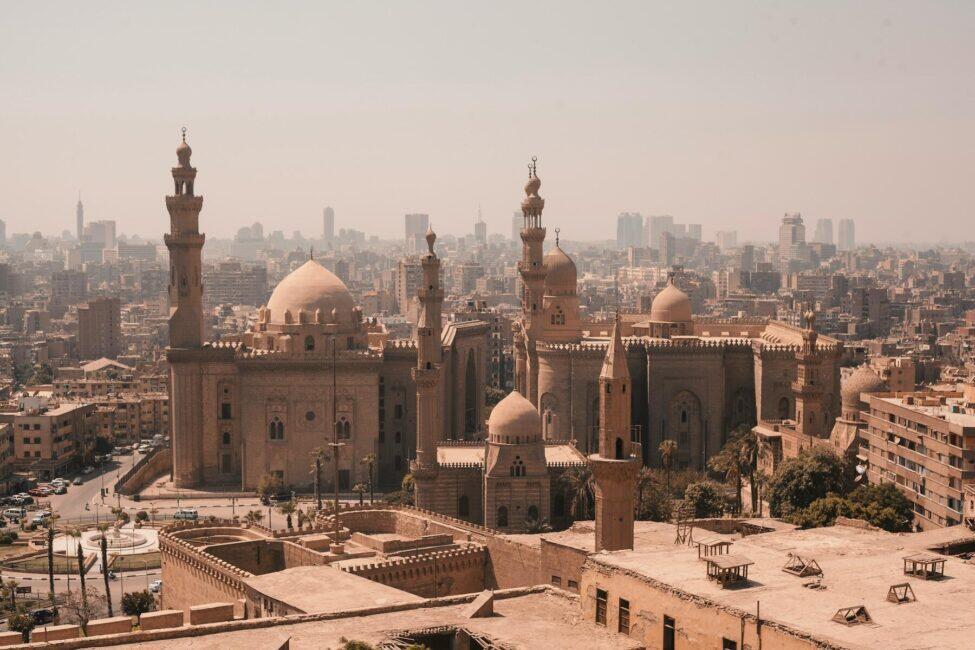
Egypt, home to one of the world’s oldest civilizations, is another stellar destination for food and culture. In Cairo, visit the Great Pyramids and the Sphinx of Giza. The Egyptian and National Museum of Egyptian Civilization are filled with precious preserved artifacts. And don’t leave the city before experiencing an elegant dinner cruise on the Nile River, which is a must.
After experiencing Cairo, head south to Aswan to learn more about the Nubians and their villages. Sail down the Nile on a felucca and take a dip! You can’t leave Aswan without visiting Philae and Abu Simbel Temples. The contrast between Cairo and Aswan is stark, making for a well-rounded itinerary.
Benin in West Africa is another country well worth visiting and too often left off travelers’ lists. Known as the birthplace of Vodun (voodoo), Benin offers a unique opportunity to learn about this religion. In Ouidah, visit the Sacred Forest and the Python Temple. Ouidah also played an important role in the transatlantic slave trade. Here you will find the Door of No Return, now a monument, once a horrifying passage that led slaves to ships headed to the Americas. Sail through Ganvie, a stilt village that began as a place to hide from slavery and is now a thriving lake village, often nicknamed the “Venice of Africa”.
In Porto Novo, the capital of Benin, enjoy museums and a sail down the Adjarra River, also known as the Black River. Learn how the community makes a living through weaving and other artistry. No trip to Benin is complete without visiting the palaces of Abomey and learning about the all-female military unit known as the Agojie. Agojie was the inspiration for the film “The Woman King.”

Photo by Teodor Kuduschiev/Unsplash
The Best Destinations for Beach Lovers
You haven’t seen water so blue until you have swum in the waters of the Indian Ocean. Although the flight will be long, it will be worth it. The Seychelles is the smallest country in Africa and has the smallest capital in the world, Victoria. Bring out the snorkeling gear to see the beautiful marine life. Beau Vallon and Anse Royal beaches are waiting for you!
You’ve already flown this far, so you might as well explore another nearby African country: Mauritius. If you’re looking for luxury, look no further. This culturally diverse country is a luxury lovers’ paradise. Turquoise waters, clear lagoons, and beautiful scenery make Mauritius the ideal place to relax. If a little bit of hiking is more your speed, waterfall treks and coastal trails are available here. Don’t let the long flight deter you from this paradise. The beautiful beaches of Le Morne, St. Felix, and Mont Choisy are some of the most spectacular on earth.
If you are not up for the long flight to Eastern Africa, West Africa has beautiful beaches worth visiting. See the white sand beaches of River No. 2 in Sierra Leone. With long stretches of beach, the likelihood of you having a piece of paradise to yourself is very high. If you are into surfing, you can catch some waves at Bureh Beach, outside of the capital of Freetown. The best time to surf in Sierra Leone is from March to October.
Cédric Dhaenens /Unsplash
The Best Destinations for Safaris
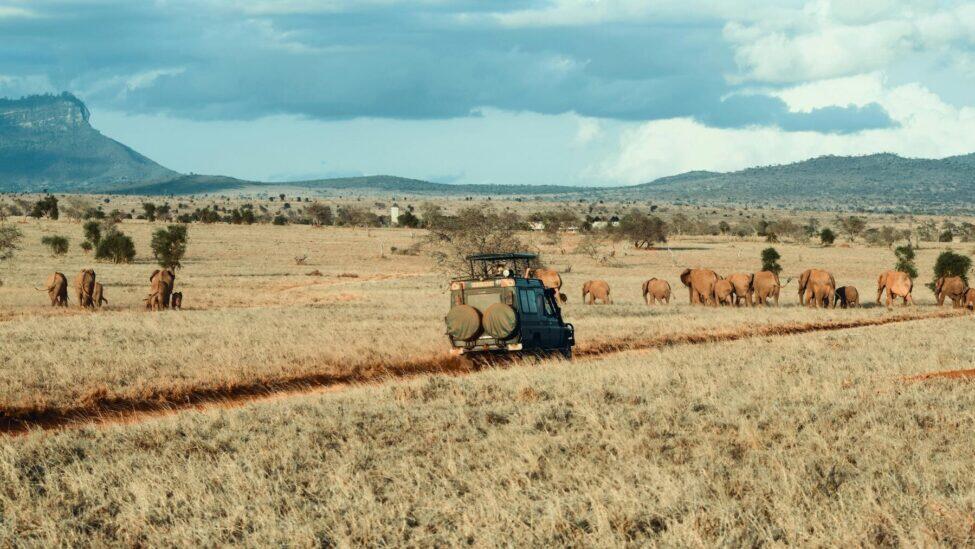
When people think about the African continent, safari is probably the first thought that comes to mind. There are so many places to see animals in their natural habitats. Kenya is the birthplace of safaris. Every year, animal lovers flock to the Masai Mara to experience the Great Migration, as animals leave the Serengeti in Tanzania to migrate to the green pastures of Kenya. Although there is no specific date, the window of opportunity to spot this annual migration is between July and September. If you are in Kenya outside of this window, you can still see animals by visiting Nairobi National Park, the only National Park within a capital city in the entire world. A shuttle from the city center will bring you here to enjoy a game drive.
Outside Kenya, Kruger National Park in South Africa is home to the Big Five (buffalo, elephants, leopards, lions, and rhinos) and is the largest reserve in the country. With lodging ranging from campgrounds to luxurious bungalows, there are accommodations for all budgets. With limited light pollution, starry nights are the best here. Pack your best safari outfits and prepare yourself for an experience of a lifetime.
If elephants are your favorite animals, you must visit Chobe National Park in Botswana, which has the highest concentration of elephants in Africa. A day trip here can be arranged from Zambia or Zimbabwe. Cruise along the Chobe River while you watch elephants bathing and lathering their bodies in mud as they try to cool off from the heat. After the river cruise, drive through the park and catch giraffes necking, zebras grazing, and many more animals prancing around.
No matter where you choose to travel in Africa—be it a safari in Kenya, a beach getaway in the Seychelles, or a cultural excursion in Egypt—this continent promises something for everyone.
Hotel execs have a partly sunny outlook for summer in the US
Short booking windows an ongoing challenge, even for major events like World Cup

Beach destinations remain popular for leisure travelers in the U.S. this summer, while major urban markets will likely see mixed results. (Getty Images)
https://www.costar.com/article/1062392064/hotel-execs-have-partly-sunny-outlook-for-summer-in-the-us?
By Bryan Wroten
Summer's still around the corner, but U.S. hotel executives already say they feel better about this year.
Summer 2025 was marked by multiple disruptions that put a damper on travel for both guests and hoteliers. New tariffs were leading to higher costs and uncertainty; the U.S. saw lower international inbound travel volume, and federal immigration raids interrupted business.
This year has its own set of disruptions, including higher oil prices, increasing what people pay at the pump as well as in the air.
Even with the uncertainty, revenue managers are saying this summer could give their hotels a much-needed moment in the sun.
Short booking windows
The overall booking window remains short, but that’s consistent with how travelers booked summer travel last year, said Leah McFarland, senior vice president of revenue strategy at Crestline Hotels & Resorts. A good percentage of business still makes its way to the hotel in what would be considered a short term, even in leisure markets and during higher-demand periods.
“I think it's going to be interesting to see if the short-term booking windows and the short-term demand play out the same way the long-term demand has, because a lot of times those have very different behaviors,” she said.
The rate of people booking their hotel anywhere from 90 to 60 days ahead of the stay is similar to how people booked last summer, McFarland said. But how shorter-term demand — from people who book their hotels less than 60 days out — plays out this year remains to be seen.
“Everything is moving so fast in terms of things that impact travel behavior,” she said. “We likely aren't going to know that until we are in that booking window, and that may mean that we have to pivot strategies very quickly, to ebb and flow with that demand.”
Though the first quarter wasn’t bad, June is when transient business pace really picks up, said Tina Meredith, senior vice president of revenue optimization at PM Hotel Group.
Major events dotting this summer's calendar in the U.S. are causing some travelers to make reservations earlier compared to last year, she said.
“They're booking reservations now for all of these things," she said. "If this were last year at this time, we wouldn't have seen nearly as much on the books, so that's ... proof that the lead times are pushing out for the summer."
When excluding 2026 FIFA World Cup or America 250-related events, the booking window is still generally pretty short, she said.
People are staying longer, but Meredith said the length of stay often depends on an event as well. Non-event-related hotel stays are likely to be shorter than those related to an event.
"Ultimately, it's still going to show by the time the summer is said and done that we'll have longer lead times,” she said. “But we still have a lot of room to book between now and then.”
World Cup uncertainty
How World Cup demand will play out this summer remains a mystery, McFarland said.
Hoteliers in her company's portfolio are watching the situation with cautious optimism, but on the FIFA group bookings front, demand has come in short of projections.
“We have seen a tremendous amount of group [business] fall off," she said. "On the transient side, there are bookings occurring, but not at any great speed, and so we're left with a decision to make about how we want to strategize that event."
With demand being softer than expected and the short-term booking window playing out as it is, commercial teams are left to figure out whether to set rates that won’t turn away normal, everyday travelers or hedge their bets longer and see if the World Cup demand pays off.
Other major sporting events in the U.S., specifically the Super Bowl, are events that are easier for hotels to benchmark against because of their deep history.
The World Cup is tougher to forecast, largely in part because the international travel associated with it remains up in the air.
Group is coming in lower than expected, international travel is a big question mark, and some of the match draws aren’t overly favorable, McFarland said. That raises the question of whether the U.S. traveler is enough to create compression in those markets and if they’re willing to pay the higher event rates.
“What I'm thinking right now is the answer is, no, it's not,” she said. “But it's not an all-or-nothing approach. You have to continue to walk back the strategy and walk back the policies until you see the demand capture click.”
Calling herself “a forever optimist,” Peachtree Group President of Hospitality Management Vickie Callahan said she believes the World Cup demand will come in, just later than hoteliers want it to.
“This is probably just some short-term pickup that we're probably going to get at a later date,” she said.
Many travelers are going to go to host markets even if they’re not going to the game, just like football fans do for the Super Bowl, because they want to experience the game where it’s happening. The cities will have extra entertainment and events going on.
“I think people are going to have a World Cup experience without actually going to the game,” she said.” I think we'll get some local drive-in traffic from that.”
Meredith said PM Hotel Group’s World Cup markets are seeing opportunities to drive rates. Transient occupancy is up in most of its markets, and the average daily rate is up significantly, too, especially in Philadelphia. That’s likely because multiple things are going on in Philly besides the World Cup and the America 250 events this summer.
“I will tell you that generally in all of our World Cup markets, our ADR is up relatively significantly versus last year,” she said. “We don't have too many situations where there's a huge amount of compression to take advantage of, so we are doing that the best we can.”
Hot summer markets
Beach destination markets are still doing well, McFarland said, pointing specifically to California and Florida. Leisure markets overall are seeing solid demand, including mountain cities in Colorado, which suffered from a bad snow season this winter.
“The ski season was absolutely horrific for your traditional Colorado ski towns,” she said. “But you know what? A lot of us are very hopeful that they get a lovely resurgence of summer travel, because it was a drier, less-snowfall winter that's going to lead to a shorter mud season or shoulder season there.”
That will depend, of course, on those areas keeping wildfires at bay this summer after such a dry winter.
The major cities continue to face challenges, except for New York City, McFarland said.
“New York continues to be that outlier that just keeps churning, but your other first-tier cities are a little bit challenged,” she said. “I think that the leisure traveler — just right now for whatever reason, and maybe it's cost-driven — doesn't seem to be as drawn to the city as they once were outside of New York.”
Washington, D.C., is an example of a major city facing some challenges. With no World Cup matches and some America 250 events, performance there could be a mixed bag, Meredith said.
“I think D.C. could be a little bit of a struggle,” she said.
On the negotiated side, PM Hotel Group isn’t seeing as much headed into the summer, she said. Group, generally for many of its markets, is flat or up, but that’s a mix between corporate and social, military, educational, religious, and fraternal groups. It’s not solely one or the other, and there’s some good occupancy still on Tuesdays and Wednesdays while in the throes of the booking window.
Corporate travel is happening, but with higher gas prices and other increased expenses, they're facing some obstacles that might slow travel down, she said.
“Airfares are in some places astronomical, and companies are feeling the pinch right to the bottom line," she said. "Travel is, in fact, probably one of the easiest and first things that they can start curtailing to help with expenses.”
The leisure markets are where Peachtree is seeing most of its summer lift, Callahan said. Nashville, Atlanta, Sacramento, and Tempe, Arizona, in particular, are looking good.
“It’s coast-to-coast for us, and it’s specific markets, which has been the trend for the last 12 months," she said. "Certain markets do really well, and then others have been a bit sluggish, which I think is normal in our industry.”
Most of the company’s hotels are in suburban locations with a few in urban markets, she said. The smaller urban cities are doing OK, especially if they have any kind of entertainment venue nearby.
Nashville was a surprise because of all the new hotels opened in recent years, but it is having a solid second quarter, Callahan said. She attributed it to the city's mix of long-term groups with smaller retail and negotiated SMERF and leisure groups.
She emphasized that there's still room to fill in hotels, but this summer definitely looks better.
"At this time last year, we were truly redirecting our sales effort pretty quickly,” she said.
The real labor crisis in hospitality is not labor. It is leadership.

https://hotelsmag.com/news/the-real-labor-crisis-in-hospitality-is-not-labor-it-is-leadership/?
Story contributed by Darryl Gibson, regional director of sales and marketing, LBA Hospitality.
For years, the hotel industry has repeated the same story. We cannot find people, no one wants to work, the talent pool is shrinking, the younger generation is different, and the labor market is impossible. But when you walk into a hotel that is well-led, you see something very different.
You see teams that stay, people who take pride in their work, consistency, standards and a culture that does not depend on luck or personality. It depends on leadership. The truth is simple. Hotels do not have a talent problem; hotels have a leadership problem. And until we are willing to say that out loud, we will keep chasing symptoms instead of fixing the cause. The labor trends we talk about so often are not random or mysterious, and they are not driven only by wages or competition. They are the direct result of what leaders allow, what they ignore, and what they fail to reinforce. People do not leave hospitality; they leave environments that feel chaotic, inconsistent, or indifferent to their growth.
There is another part of this conversation that deserves attention. If we want young people to see hospitality as a real career, we have to earn that perception. The industry has not done that. Our reputation has taken a hit, and we have not rebuilt it. We cannot expect high school and college graduates to choose hospitality when everything they hear about the industry sounds unstable, exhausting, or outdated. Recruitment is not just about filling openings. Recruitment is a reflection of leadership. It is our responsibility to make this industry look like a place where ambition is rewarded, growth is possible, and people are treated with respect. That starts with the way we present ourselves.
Most hotel job postings still read like they were written decades ago: responsibilities, requirements, availability, and “other duties as assigned.” There is nothing about purpose, culture, development, or leadership.
Young people are not looking for a job; they are looking for a path. If we cannot articulate that path, they will choose industries that can. And even when we do write stronger, more modern job descriptions, we have to be honest with ourselves. We can put anything we want on paper. Culture statements, development promises, and leadership philosophies all sound good, but none of it matters unless our frontline hiring managers actually believe it. What we say on paper must match what we reinforce in the building.
Culture, development, and leadership cannot be talking points. They must be lived values that resonate from the top down and show up in the way every manager hires, trains and leads.
The Untold Story
Hospitality offers one of the fastest career runways of any field. A high school graduate can become a general manager in a few years. A college graduate can run a multimillion-dollar asset before they turn thirty. A driven person can build a career that touches sales, operations, revenue, HR, ownership, and development. No other industry offers that kind of mobility without requiring advanced degrees. Yet we rarely tell that story. We assume people will discover it once they get here. That is not a strategy; that is wishful thinking.
We also must acknowledge the damage done during the pandemic. Many people felt disposable, unseen, and unsupported. They felt like the industry they gave everything to did not give anything back. That reputation did not disappear; it stuck. If we want young people to choose hospitality, we have to show them that the industry they heard about is not the industry we are building now. That requires leadership, not slogans or campaigns.
Inside the operation, the patterns are clear. In many hotels, standards shift from day to day. Expectations depend on who is managing the shift. Processes are unclear, and training is rushed or inconsistent. When the operation feels unpredictable, people burn out. They stop trusting leadership. They stop believing that their effort matters, and eventually, they leave.
Another pattern is the way we promote people. Too often, supervisors and managers are elevated because they have been around the longest, not because they are prepared to lead. They are handed responsibility without coaching, development, or the tools to hold others accountable.
When leaders are unprepared, teams feel it immediately. They feel the lack of clarity, direction, and support—and again, they leave. Strong hotel leadership today requires clear standards, real training, predictable systems, and accountability that feels like support rather than pressure. It requires presence, not just being in the building, but being engaged. Coaching in real time. Reinforcing expectations. Listening to the team. Addressing issues before they become patterns.
The business case is undeniable. Lower turnover means lower training costs. Consistent culture means a better guest experience. Clear standards mean fewer mistakes. Teams that feel supported stay longer, perform better, and create environments that attract talent instead of chasing it. The hotels that will win the next decade are not the ones with the newest design or the most amenities. They are the ones with leaders who understand that culture is not a perk; it is a strategy. Leadership is not a title; it is a responsibility. And labor trends are not a mystery; they are a mirror.
If we want to solve the labor crisis, we must stop calling it a labor crisis and call it what it is: a leadership crisis. And we must be willing to lead differently.
Hilton appoints area general manager, Canada

https://hotelsmag.com/news/hilton-appoints-area-general-manager-canada/?
Hilton has announced the appointment of Linda Griffin as area general manager, Canada, overseeing a portfolio of full‑service and focused‑service hotels across Ontario, Québec, and British Columbia. In her new role, Griffin will provide strategic leadership and operational oversight for Hilton Québec, Hilton Toronto, Hilton Toronto Airport Hotel & Suites, Hilton Mississauga/Meadowvale, Hampton Inn & Suites by Hilton Belleville, and Hampton Inn by Hilton Chilliwack.
Based in Ontario at the Hilton Toronto, the appointment marks Griffin’s return to the property, as she held reservations and front office roles at the Hilton Toronto and Hilton Toronto Airport Hotel & Suites in 1989 at the beginning of her career.
“There is something incredibly special about returning to Hilton Toronto and the properties that played such an instrumental role in shaping my career with Hilton—it truly feels like a full‑circle moment,” she said. “I’m grateful for the experiences, both in Canada and globally, that have shaped my journey, and I look forward to supporting our Canadian hotel teams as we build on Hilton’s legacy in the market through a shared commitment to service excellence and empowered teams.”
“Linda is a respected Hilton leader with an extraordinary depth of operational experience and a leadership style rooted in consistency and collaboration,” said Kristen Stampe, area vice president of operations, Hilton. “Known for building strong performance-driven cultures and leading with a future-focused operational mindset, Linda has a passion for creating authentic experiences for guests. Having grown her career with Hilton across multiple regions and returning to lead our Canadian portfolio, she brings both a deep understanding of our culture and a global perspective that will continue to strengthen our hotels and teams.”
Griffin began her career at the Delta Meadowvale Hotel (now Hilton Mississauga/Meadowvale) in 1988. Over more than three decades, she has built a global career spanning five continents and eight countries, including Canada, with senior leadership roles across North America, Europe, and the Mediterranean.
Previously, Griffin held leadership positions at Hilton Aruba Caribbean Resort & Casino, followed by a role with Hilton’s Front Office Development team based in the United Kingdom. She later served as area revenue manager for the Mediterranean, supporting 17 Hilton hotels across Southern Europe and the Mediterranean.
Returning to on-property leadership, Griffin held senior operational roles at the former Hilton Athens (now Conrad Athens The Ilisian) before being appointed to hotel and cluster general manager positions across Turkey, Romania, and the United Kingdom, including the former Athénée Palace Hilton Bucharest and Hilton London Kensington. Her career also includes leadership roles with Jumeirah Group and Dimensions Health Centers Inc.
DUHC&S | Strategic Hospitality Consulting & Advisory
We transform hospitality and tourism businesses through strategic solutions, operational efficiency, and comprehensive renovation. With over 40 years of experience working with brands like Hilton, Hyatt, Sheraton, and Sonesta, we enhance asset value and profitability through:
*Operational excellence and brand standards (GSI +90%)
*Market penetration and commercial strategies
*Key partnerships and disruptive innovation
*Hotel openings and repositioning
Proven results :
✅ 48% GOP |
✅ +120% asset valuation growth
✅ Successful projects across 6 Latin American countries
🔹 Let's connect :
📩 Email: diurugeles@gmail.com
📱 WhatsApp: +57 3153259968
Instagram: https://www.instagram.com/diur_2000/
https://viajes-noticias-duhospitality.blogspot.com
https://viajes-duhospitality.blogspot.com
https://travel-duhospitality.blogspot.com
Disclaimer
DUHC&S shares this information for educational and informational purposes only. The news articles reproduced here are sourced from public and recognized media outlets. We are not the original authors of this content but rather distributors of it. All credits go to the original sources cited in each article. If you are the legitimate owner of any material and wish to have it modified or removed, please contact us immediately at diurugeles@gmail.com, and we will address your request promptly.


Comments
Post a Comment