What a new investor survey reveals about consensus estimates
What a new investor survey reveals about consensus estimates

https://www.mckinsey.com/capabilities/strategy-and-corporate-finance/our-insights/what-a-new-investor-survey-reveals-about-consensus-estimates?
By
with
with
New findings show misses matter only when they signal a weaker outlook. Plus, guidance on disclosures, earnings calls, and long-term communication.
Historically, the prevailing wisdom has been that meeting or beating consensus estimates is critical to valuation. But in McKinsey’s 2026 Global Investor Survey, respondents indicate that they do not respond to misses themselves. Instead, intrinsic investors say that they tolerate occasional misses when the long-term value-creation story remains intact, and that what matters far more than any single quarter is consistency of execution against a credible strategic framework. These findings dovetail with our long-standing view that many companies overindex on consensus earnings (see sidebar “McKinsey research on consensus misses”).
This and other survey findings provide insights that can help shape today’s most effective investor communications efforts. Respondents report that they rely less on sell-side research than they did in the past and more on AI tools to analyze reports and disclosures. In large numbers, they express a desire for greater opportunities to probe management on quarterly calls, getting more financial detail and transparency, and fewer prepared remarks. Finally, intrinsic investors identify segment-level disclosure as a significant area where they crave improvement so that they can build independent models.
This article shares the data from our current survey (see sidebar “Our methodology”), along with reflections on how these findings line up with previous McKinsey research and analyses. We conclude with four recommendations for companies to improve their interaction and communication with their most important investors.
Respondents punish surprise consensus outcomes more than they reward patterns of greater-than-expected performance
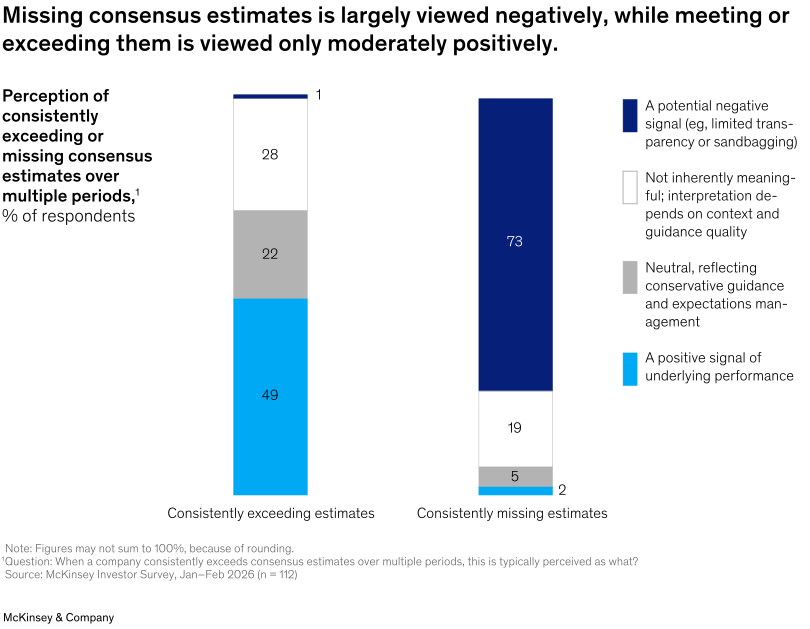
Meeting or exceeding consensus earnings estimates matters to a majority of respondents: 59 percent rate it as important or very important. But when asked to choose what matters more over time, 62 percent pick “occasional misses but strong long-term value creation” over “consistently meeting consensus.” Notably, only 17 percent select the latter. The asymmetry in how respondents read patterns is revealing. When a company consistently exceeds estimates, only 49 percent treat it as a positive performance signal; 22 percent read it as conservative guidance, and 28 percent say it depends on context (Exhibit 1). But when a company consistently misses, 73 percent treat it as a negative signal of transparency or control. In short, this is a market that uses consensus as a lens into management credibility rather than as an end in itself.
Exhibit 1
We strive to provide individuals with disabilities equal access to our website. If you would like information about this content we will be happy to work with you. Please email us at: McKinsey_Website_Accessibility@mckinsey.com
Investor reliance on sell-side analyst reports has decreased, while their use of AI has increased
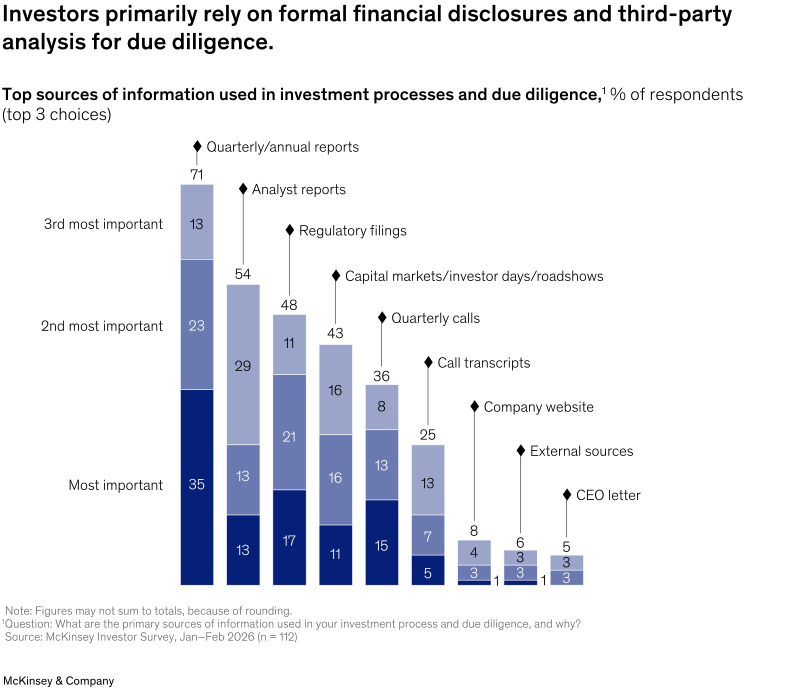
Investors’ primary information sources have not changed: 71 percent of respondents rank quarterly and annual reports among their top inputs, 54 percent cite analyst reports, and 48 percent cite regulatory filings (Exhibit 2).
Exhibit 2
We strive to provide individuals with disabilities equal access to our website. If you would like information about this content we will be happy to work with you. Please email us at: McKinsey_Website_Accessibility@mckinsey.com
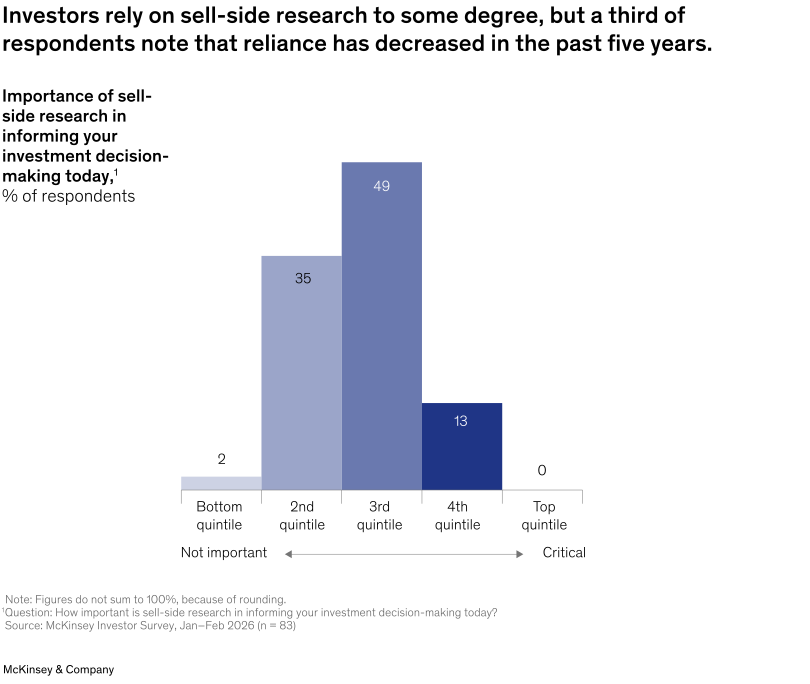
What has changed is the intermediary layer. Only 13 percent of respondents consider sell-side research very important; none consider it critical.
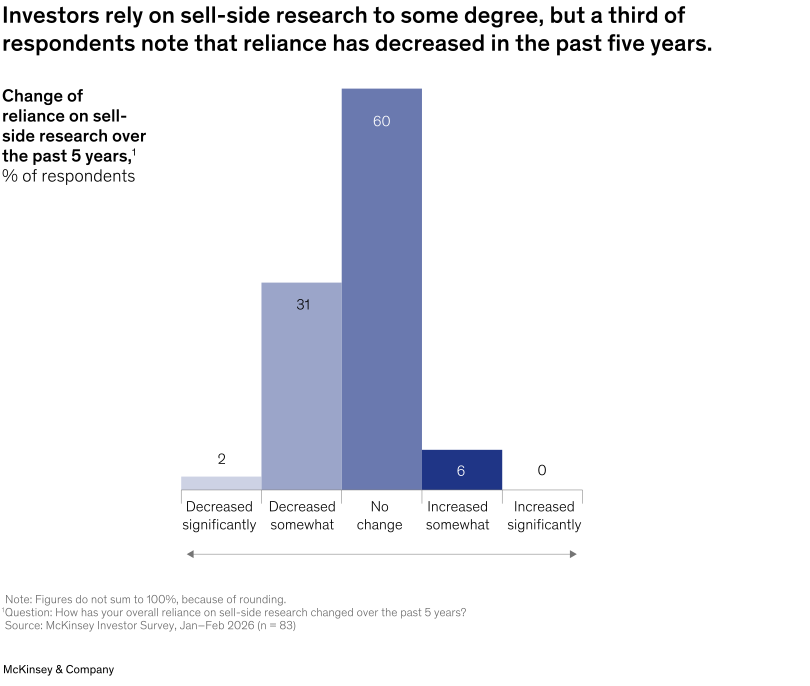
And over the past five years, 33 percent report that their reliance on sell-side research has decreased, and only 6 percent say it has increased.
Exhibit 3
We strive to provide individuals with disabilities equal access to our website. If you would like information about this content we will be happy to work with you. Please email us at: McKinsey_Website_Accessibility@mckinsey.com
We strive to provide individuals with disabilities equal access to our website. If you would like information about this content we will be happy to work with you. Please email us at: McKinsey_Website_Accessibility@mckinsey.com
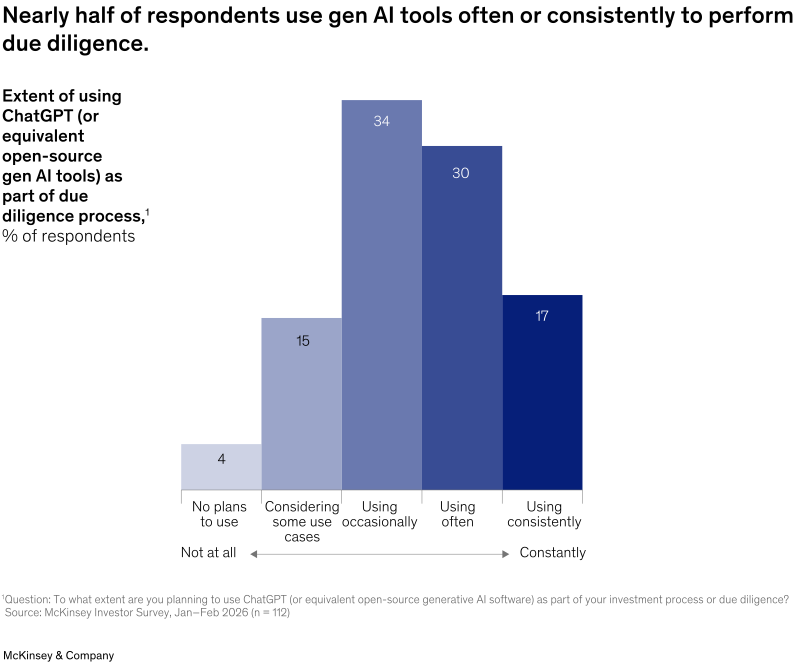
At the same time, new tools are entering the workflow. Forty-seven percent of investors now use generative AI tools often or consistently in due diligence, and 81 percent use them at least occasionally. Only 4 percent have no plans to adopt them (Exhibit 4).
Exhibit 4
We strive to provide individuals with disabilities equal access to our website. If you would like information about this content we will be happy to work with you. Please email us at: McKinsey_Website_Accessibility@mckinsey.com
AI usage represents a structural shift in how disclosures are consumed. In the past, inconsistencies such as changes in definitions, adjustments that don’t reconcile, or shifts in segment reporting were only picked up if a particularly careful analyst noticed them. Today, algorithms can scan for these issues, cross-checking disclosures across periods and across peers. As a result, inconsistencies are surfaced systematically and can quickly raise questions about the company’s transparency and the reliability of its disclosures.
The quarterly call: Investors want interaction, not a script
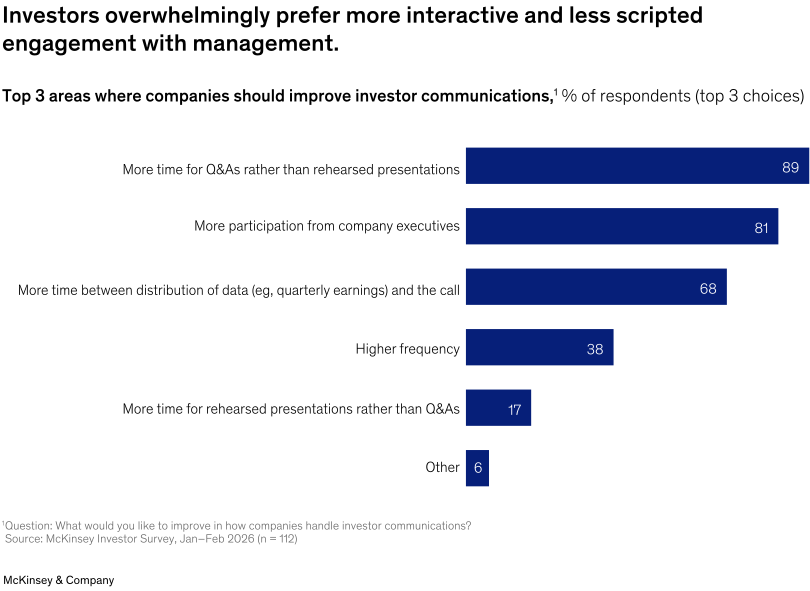
Asked how to improve quarterly calls, investors converge on a single theme: They want more leeway to probe management. Nearly nine in ten investors want more time for Q&As; eight in ten want more executives present; and two-thirds want a longer lag between data distribution and the call so they can prepare targeted questions. Higher frequency ranks as the fourth-most-requested improvement (Exhibit 5).
Exhibit 5
We strive to provide individuals with disabilities equal access to our website. If you would like information about this content we will be happy to work with you. Please email us at: McKinsey_Website_Accessibility@mckinsey.com
In contrast, more rehearsed presentations rank last. Investors have long told us that prepared patter is not what they’re looking for. Instead, they largely want opportunities to engage on the numbers with management. Best-in-class calls respect these preferences.
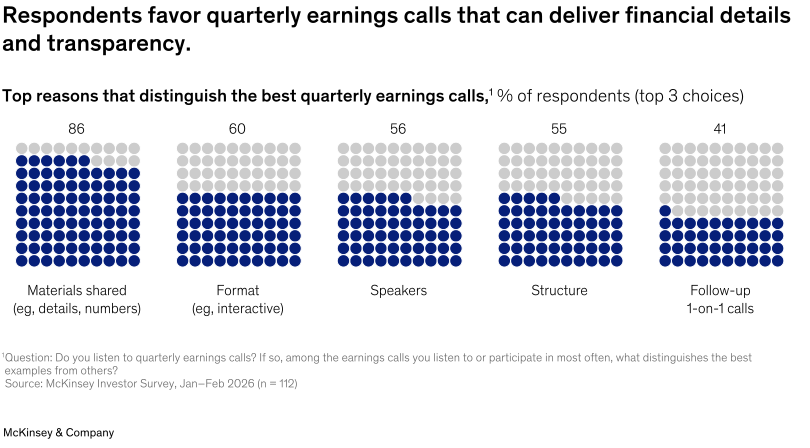
Even more important to respondents is the depth and specificity of materials shared. Eighty-six percent of respondents rank it as the most important differentiator—above format, speakers, or structure (Exhibit 6).
Exhibit 6
We strive to provide individuals with disabilities equal access to our website. If you would like information about this content we will be happy to work with you. Please email us at: McKinsey_Website_Accessibility@mckinsey.com
These responses match those of previous surveys; respondents consistently describe excellent calls as ones with transparency and candor, financial detail about segment breakdowns and relevant KPIs, and consistent structure quarter to quarter. They also point to capital markets days (CMDs) and other investor interactions as particularly valuable formats for this kind of dialogue, offering the time, depth, and executive access that quarterly earnings calls cannot match.
Respondents want more segment-level disclosure than they typically get
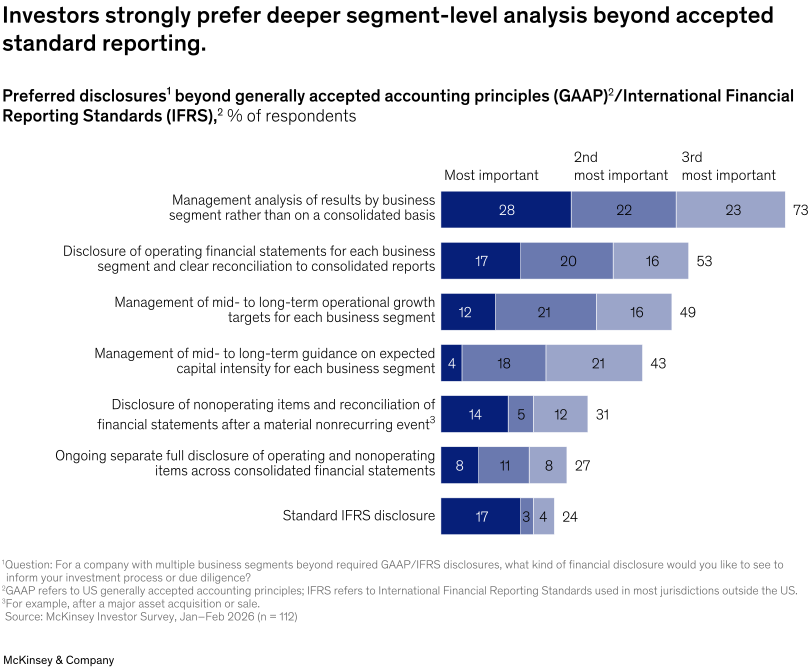
Investors want more segment-level disclosure from companies with multiple business lines than most companies provide. Seventy-three percent of respondents identify segment-level management analysis as one of their top three desired disclosure enhancements, while 53 percent select segment operating statements with clear reconciliation. Forward-looking segment detail is also in demand: 49 percent of respondents seek mid- to long-term growth targets by segment, and 43 percent want capital intensity guidance by segment. Just under a quarter are satisfied with standard International Financial Reporting Standards (IFRS) disclosure alone (Exhibit 7).
Exhibit 7
We strive to provide individuals with disabilities equal access to our website. If you would like information about this content we will be happy to work with you. Please email us at: McKinsey_Website_Accessibility@mckinsey.com
These preferences make sense: Investors underwrite by understanding the performance of individual business segments and need to know which parts of the portfolio are compounding, which are consuming capital, and whether management is allocating rationally among them. Companies that only report at the consolidated level force investors to guess—and investors often discount what they cannot verify.
Implications for companies
The latest survey results point to four areas companies can address directly in their investor communication efforts. The first—reframing how the company views and responds to consensus outcomes—is arguably the most complex, because it requires a change of mindset and behavior, in addition to a new approach to outreach.
- Don’t worry too much about a single consensus miss unless it is an early indicator of genuine long-term deterioration. And don’t try to avoid a miss at all costs through short-term earnings management tactics (such as accelerating asset sales, cutting R&D, or pulling forward revenue). These tactics may temporarily protect the consensus outcome but damage the forward-earnings base. Remember that a miss alone rarely moves the stock and, in fact, share prices rise after about 40 percent of misses. Intrinsic investors punish not the short-term shortfall but a weakened long-term outlook.
- Instead, focus on three communication disciplines:
- First, make the long-term thesis clear. Articulate explicit medium-term targets (for example, three-to-five-year revenue growth corridors, margin trajectories, and ROIC thresholds) and report progress against them each quarter, so investors can independently assess whether the business is on track.
- Second, reduce surprises through proactive expectation management. If a headwind is building, flag it early with quantified impact ranges rather than waiting for it to show up in a miss. Survey responses indicate that investors distinguish between management teams that get ahead of bad news and those that let consensus drift until the gap becomes undeniable.
- Third, build a delivery track record by setting specific commitments that can be scored. For example, instead of vague comments such as, “We expect margin improvement,” provide data such as, “We are targeting 50 to 75 basis points of operating margin expansion in fiscal year 2027 through three specific initiatives.” Over time, a pattern of setting and meeting concrete commitments earns the credibility that lets investors look through a single quarter’s noise.
- Prepare reports and disclosures for the era of AI. Investors increasingly use AI-powered tools to parse filings, compare language across quarters, and benchmark disclosures against peers. Inconsistencies that once may have gone unnoticed can now surface instantly. The practical implication is not just to avoid errors but to design documents with machine readability in mind. Use consistent segment definitions, KPI labels, and reporting periods across every published document, including earnings releases, 10-Ks, investor presentations, and CMD transcripts. When metrics change, explicitly bridge the old definition to the new one. Companies can also use AI tools to audit their own disclosure suite for internal consistency before publication. For example, they can use an AI tool to compare a draft earnings release with the most recent investor day transcript and a peer set’s latest filings and fix the discrepancies before an analyst’s model does.
- Make better use of earnings calls. Shorten prepared remarks, allow more time for Q&A, put the executives who own the numbers in the room, and build in a lag between data release and the call so that investors have time to prepare their questions. Consider augmenting earnings calls with capital markets days to provide investors with more access to management and with deeper insights into strategic direction.
- Give investors more segment-level data. As the survey demonstrated, most investors want management analysis and operating statements by segment; only a quarter are satisfied with standard IFRS alone. The reason most companies don’t go further is well understood: allocation complexity, differences between internal management views and statutory reporting segments, and concern about exposing segment-level margins to competitors. But as McKinsey research on segment reporting has argued, the cost of minimal disclosure is that investors are forced to estimate segment returns on their own —and those estimates are often far from the reality of the business’s performance and valuation.
The fix does not require disclosing everything. At a minimum, aim to report enough for investors to estimate the return on capital by segment, such as the segment’s operating profit, depreciation and amortization, and a breakdown of assets including property, plant, and equipment; intangibles; and goodwill. Companies like Roche, Maersk, and Deere demonstrate that this level of transparency is achievable across industries: Roche reports operating assets at the segment level, Maersk discloses invested capital by segment, and Deere provides full income and balance sheet separation for its financing arm. Where competitive sensitivity is a genuine constraint, directional indicators such as revenue mix, growth rates, and margin trajectories by segment give investors enough to build independent models without publishing exact figures that a competitor could exploit.
Sail to Hawaii for 16 Nights Starting at Just $999

Pierre Leclerc/Shutterstock
https://www.fodors.com/world/north-america/usa/hawaii/experiences/news/16-night-hawaii-cruise-deals-sail-for-999
Ditch the airports and sail directly to the lush Hawaiian Islands on a 16-night cruise starting at just $999 per person.
Skip the stressful airport lines, the long transpacific flights, and the hassle of inter-island air travel. Right now, travelers can sail to four incredible Hawaiian islands (and a bonus stop in Mexico) for a fraction of the typical cost. At just $63 per night, this epic 16-night Princess Cruises voyage starts at $999 per person via Travelzoo and PrestigeCruises.com. Considering similar trips can run close to $1,800, this is a phenomenal opportunity to soak up the aloha spirit while saving big.
What Makes This Itinerary Shine
Sailing round-trip from either Los Angeles or San Francisco, this itinerary hits all the right notes for a comprehensive Hawaiian getaway, plus a fun detour in Baja California.
Kauai (Nawiliwili): Experience the lushest, calmest of the main islands. Drive up to Waimea Canyon—the “Grand Canyon of the Pacific”—for sweeping red and green views that make Arizona jealous, or spot an endangered monk seal resting safely at Poipu Beach.
Honolulu (Oahu): Far beyond its beach-city stereotype, Honolulu offers classic sunrise hikes at Diamond Head, the legendary beginner surf breaks of Waikiki Beach, and vital U.S. history at the Pearl Harbor National Memorial.
Hilo (Hawaii / Big Island): Moody, green, and steeped in volcanic drama. Hawai‘i Volcanoes National Park is an absolute must-visit to see trails running right through smoldering lava fields and rich rainforests.
Kahului (Maui): The ultimate gateway to adventure. Twist down the famous Road to Hana to see cascading waterfalls and black-sand beaches, or head to Upcountry Maui for unique treats like Surfing Goat Dairy cheese and ocean breezes.
Ensenada, Mexico: This easygoing Baja port offers the perfect final stop. Check out the towering La Bufadora marine blowhole and grab a legendary fish taco along the rowdy, delicious Mercado Negro.

Norbert Turi/Shutterstock
The Ship Experience
You will sail aboard either the Ruby Princess or the Emerald Princess. On the Ruby Princess, expect a classic 4-star Fodor’s cruising experience. While it caters beautifully to those seeking relaxation—boasting four pools, seven hot tubs, and The Sanctuary (a breezy, adults-only retreat)—it also features modern conveniences like Princess’ MedallionClass technology for contactless boarding and on-demand delivery. The magnificent three-deck Piazza serves as the glittering hub of the ship, perfect for grabbing a coffee, listening to live music, and unwinding after a long day ashore.
Deal Specifics & What’s Included
This offer packs in exceptional value. For $999 per person, here is exactly what is included in the base fare:
– 16 nights in an inside cabin aboard Ruby Princess or Emerald Princess.
– Taxes, fees, and port charges are fully included (a $290–$410 value).
– $85 onboard spending credit per cabin.
– An onboard coupon book valued at $900, valid for restaurants, shops, the casino, and more.
– Free third and fourth guests (government taxes and additional larger cabin charges may apply).
(Note: While the travel dates are clearly outlined below, an exact expiration date or booking window for this deal was missing from the provided terms. Because cruise pricing fluctuates dynamically based on capacity, travelers should act fast.)
Travel Dates & Pricing: Departures are available at varying price tiers (all per person, based on double occupancy):
– $999: Nov. 8, 28, 29, 2026; Jan. 9, 11, 27, 2027
– $1,099: Jan. 25; Feb. 10, 12, 26; March 16; April 1, 4, 2027
– $1,199: Feb. 28, 2027
Solo travelers can secure rates starting at $1,578. If you prefer a view, balcony cabin upgrades are available for $1,599 per person (oceanview and suite cabins are also discounted). For a more all-inclusive feel, add the “Princess Plus” package for $65 per person, per night, which covers drinks, tips, Wi-Fi, and more.

Rene Holtslag/Shutterstock
How to Book
This deal is sourced via Travelzoo and fulfilled by PrestigeCruises.com. It is exclusive to Travelzoo members, but membership is just $50 annually or $1 for a 30-day trial.
The Fine Print: Prices are per person, based on two travelers sharing a cabin, in U.S. dollars. A nonrefundable reduced deposit of $100 per person is due upon booking, with final payment due 130 days prior to sailing. All promotional offers are available for new bookings only, are not combinable with other discounts, and are subject to availability. Prices and terms are subject to change. If you need to make changes to your trip, you may do so for a fee; review PrestigeCruises.com’s terms and conditions before booking. Travel insurance is highly encouraged.
Delta Just Made First Class Cheaper — But There's a Catch

Courtesy of Delta Air Lines
https://www.fodors.com/world/north-america/usa/experiences/news/delta-launches-cheaper-first-class-and-business-class-fares-with-fewer-perks
Delta is introducing discounted fares across its premium cabins, including Delta One, by removing perks like seat selection, lounge access, and ticket flexibility.
Another airline has stripped away benefits from business class in exchange for lower fares. And not just business class—Delta Air Lines announced Wednesday that new “Basic” fares in each of the carrier’s premium cabins were already on sale for travel beginning in September.
The fares, which offer the same onboard experience but strip away many of the “soft” amenities like seat assignments, mileage earning, ticket change flexibility, and generous checked baggage allowances, would be offered in the Delta First (domestic first class), Delta Premium Select (premium economy) and Delta One (long haul business class, rebranded “Basic Business” for passengers purchasing the lowest fare tier).
In particular, the end of advance seat assignments could mean that Delta’s premium cabin passengers begin to have the dreaded seat-swapping conversation more frequently. While this hadn’t previously been entirely avoidable in premium cabins, it was certainly less frequent due to the much broader availability of seats for pre-selection (it was available to every passenger regardless of fare paid).
Delta reasons that passengers for whom the value of a premium fare purchase focuses on the onboard experience, and not on the peripheral benefits, would be attracted to a lower price point. “This expansion gives customers more ways to choose the Delta experience that best fits their trip and a new way to access our premium-tier products,” said Joe Esposito, executive vice president, chief commercial officer. “No matter the fare, every customer can expect the thoughtful service, comfort and care that continues to set Delta apart.”
Delta says the “Basic Business” moniker applies to the discounted fares in the Delta One cabin because major components of that experience aren’t included, such as dedicated Delta One check-in areas or access to Delta Sky Clubs or Delta One Lounges. The airline has, however, given a temporary reprieve on that: “As customers become accustomed to the new fare parameters, access to the Delta One Lounge and Delta Sky Club will be permitted on a Basic Business ticket for travel dates through Jan. 18, 2027.”
After that, it’s curtains for lounge access on Basic Business unless you otherwise qualify for access with a frequent flier membership. Airlines have long sought to alleviate overcrowding in their lounges, and removing lounge access from some business-class fares is one way to help thin out the crowds.
The move follows an announcement earlier this year that United Airlines would begin offering a similar discounted business class fare in exchange for stripped-down amenities. United is offering the fares on its United Polaris and United Premium Plus (long-haul business and premium economy) cabins, but—unlike Delta—not yet on domestic United First fares. United’s basic fares are similar, with reductions to ticket flexibility, baggage allowance, and lounge access. In a difference from Delta, United will still allow purchasers of its basic business fare access to United Clubs, while Delta’s fare won’t offer lounge access at all.
Delta has not given specifics on which cities or flights would be offering the new basic fares, and a cursory check of major markets for flights after September found that for many, it appeared to be business as usual: Delta continued to offer Main Basic, its current basic economy product, but there was no sign yet of discounts to premium cabins.
It’s already been a year of major change in the airline industry. Southwest Airlines made major (and controversial) product overhauls, Spirit Airlines folded, and the Iran War sent the cost of jet fuel (and airfares) soaring.
In early May, Delta said it would suspend drink and snack service on its shortest flights, but add the service to other short flights that previously had only abbreviated service.
DUHC&S | Strategic Hospitality Consulting & Advisory
We transform hospitality and tourism businesses through strategic solutions, operational efficiency, and comprehensive renovation. With over 40 years of experience working with brands like Hilton, Hyatt, Sheraton, and Sonesta, we enhance asset value and profitability through:
*Operational excellence and brand standards (GSI +90%)
*Market penetration and commercial strategies
*Key partnerships and disruptive innovation
*Hotel openings and repositioning
Proven results :
✅ 48% GOP |
✅ +120% asset valuation growth
✅ Successful projects across 6 Latin American countries
🔹 Let's connect :
📩 Email: diurugeles@gmail.com
📱 WhatsApp: +57 3153259968
🎥 YouTube:https://www.youtube.com/@DUHC-S
Instagram: https://www.instagram.com/diur_2000/
https://viajes-noticias-duhospitality.blogspot.com
https://viajes-duhospitality.blogspot.com
https://travel-duhospitality.blogspot.com
Disclaimer
DUHC&S shares this information for educational and informational purposes only. The news articles reproduced here are sourced from public and recognized media outlets. We are not the original authors of this content but rather its distributors. All credits go to the original sources cited in each article. If you are the legitimate owner of any material and wish to have it modified or removed, please contact us immediately at diurugeles@gmail.com, and we will address your request promptly.


Comments
Post a Comment